
Carrot and Daikon Salad with Gochujang Dressing
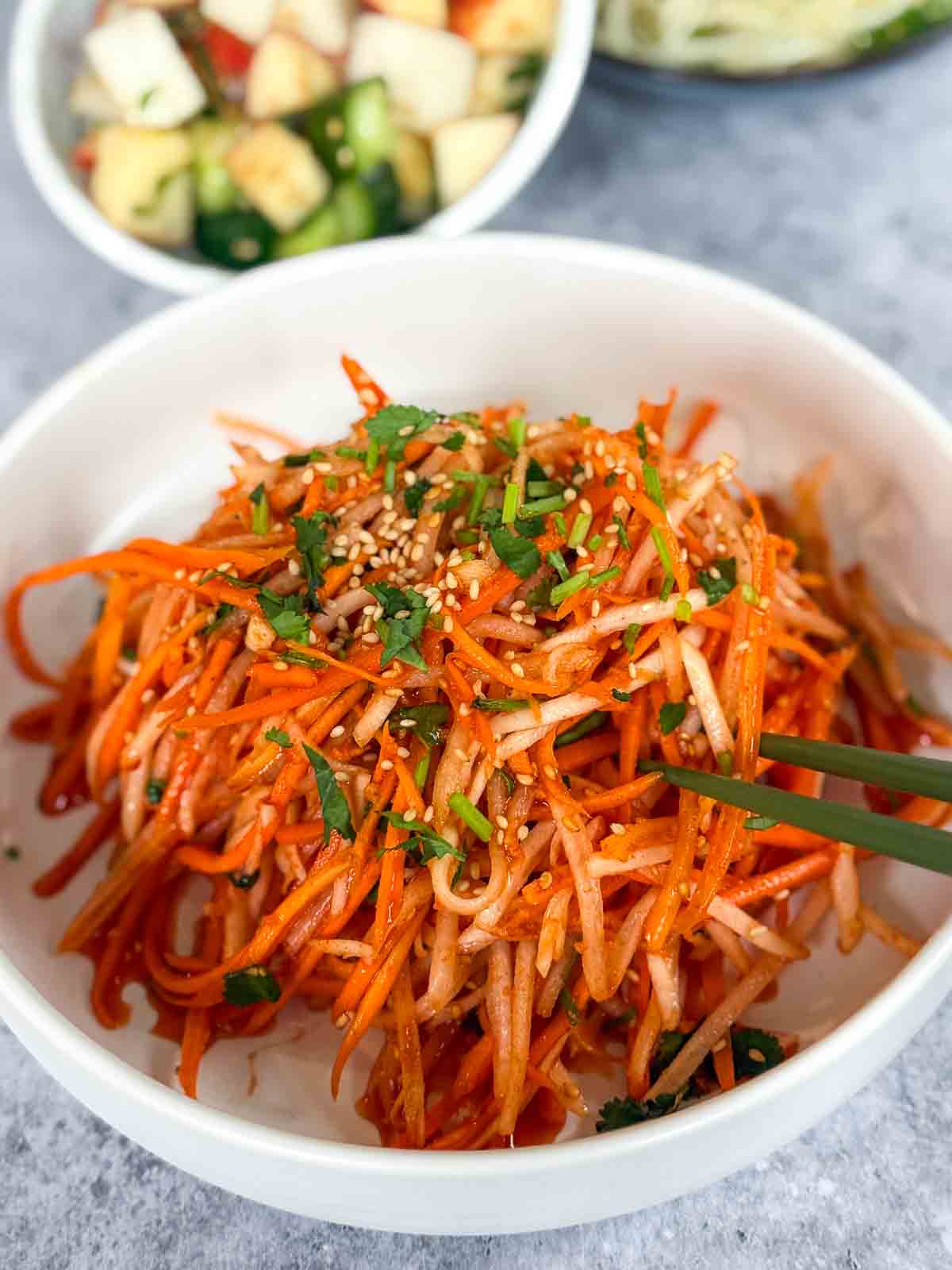
This shredded carrot and daikon salad is tossed in a bold gochujang dressing with garlic, ginger and sesame. A simple carrot salad recipe with a Korean kick.
Your New Favourite 15-Minute Side Dish
This carrot and daikon salad is one of those recipes that looks simple on paper but delivers way more than you expect.
Shredded carrot and daikon are tossed in a punchy gochujang dressing spiked with garlic, ginger, rice vinegar, and sesame.
The result is a vibrant, crunchy, boldly flavoured salad that works as a side dish, a banchan-style accompaniment, or a light meal all on its own. It is bright, fresh, a little spicy, and completely addictive.
What makes this shredded carrot salad recipe so satisfying is the contrast of textures and flavours working together in every bite.
The carrot brings natural sweetness, the daikon adds a cool, slightly peppery crunch, and the gochujang dressing ties everything together with its signature heat, depth, and umami richness.
Fresh coriander and toasted sesame seeds finish the dish and round out every mouthful beautifully. If you love bold Asian-inspired sides, this one sits right alongside our Korean Bellflower Root Side Dish or Korean Braised Lotus Roots as a must-make.
The best part is how quickly it all comes together. Once your carrot and daikon are shredded the rest is just mixing and tossing. No cooking required.
If you are building a spread of Korean-inspired sides, check out our full collection of Korean Side Dish Recipes for more ideas.
Gochujang: The Ingredient That Makes This Salad
Gochujang is the hero of this dressing and it is worth knowing a little about it. It is a Korean fermented chilli paste made from red chilli powder, glutinous rice, fermented soybean, and salt.
Unlike fresh chilli heat that hits immediately, gochujang delivers a deeper, slower warmth with layers of sweetness, saltiness, and a distinct umami depth that comes from the fermentation process.
It has been a staple of Korean cooking for centuries and is behind the flavour profile in dishes like bibimbap, tteokbokki, and Korean fried chicken. You will find it in most major supermarkets these days and once you have it in your fridge, you will use it constantly.
A little goes a long way, and it keeps well for months. If you are new to cooking with Korean flavours, our Roasted Asian Eggplant with Gochujang Glaze is another great starting point for simple Asian-inspired sides.
A no-cook shredded carrot and daikon salad dressed in gochujang, rice vinegar, soy, garlic, and ginger. Topped with sesame seeds and coriander. Ready in 15 minutes. Vegan, gluten free adaptable, and dairy free.
Recipe Overview
Flavour/Texture: Bold, crunchy, and layered. Sweet carrot, cool peppery daikon, and a deeply savoury gochujang dressing with gentle heat and umami warmth. Toasted sesame and fresh coriander round it all out. Every forkful is light and crisp with serious flavour behind it.
Ease: As easy as it gets. Peel, shred, mix, done. No cooking, no complicated techniques. If you have a mandoline, the prep is even faster. This is a genuine beginner-friendly recipe that anyone can nail on their first attempt.
Time: On the table in 15 minutes, start to finish. Most of that time is the shredding — once that is done, everything moves fast. It is genuinely one of the quickest sides you can make.
Ingredients for Carrot and Daikon Salad
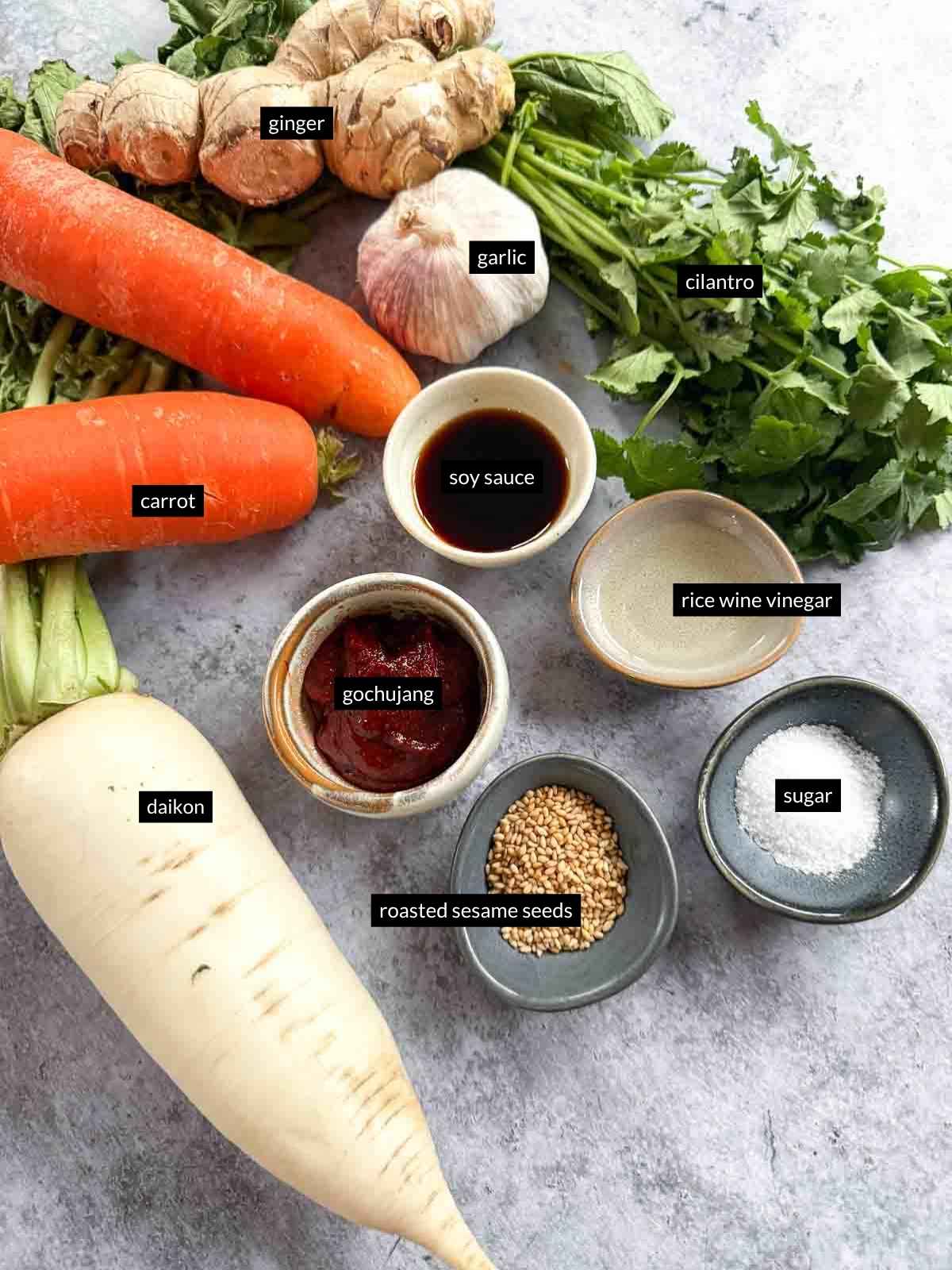
Carrot: One large carrot is all you need. Look for firm, smooth carrots with no soft spots or cracks — these will shred cleanly and hold their crunch. Fresh and shredded yourself is always better here.
Daikon: Daikon is a large white Japanese radish with a mild, slightly peppery flavour and satisfying crunch. Choose one that feels heavy and solid for its size with smooth, unblemished skin.
Avoid any that feel spongy or hollow. That is a sign they are past their best. For this shredded daikon salad, you only need one medium daikon, so look for smaller ones if your store stocks different sizes.
Sometimes daikon can be massive and there is no way to finish it. You can however also try to make this Daikon Cucumber Apple Salad with Togarashi Dressing recipe.
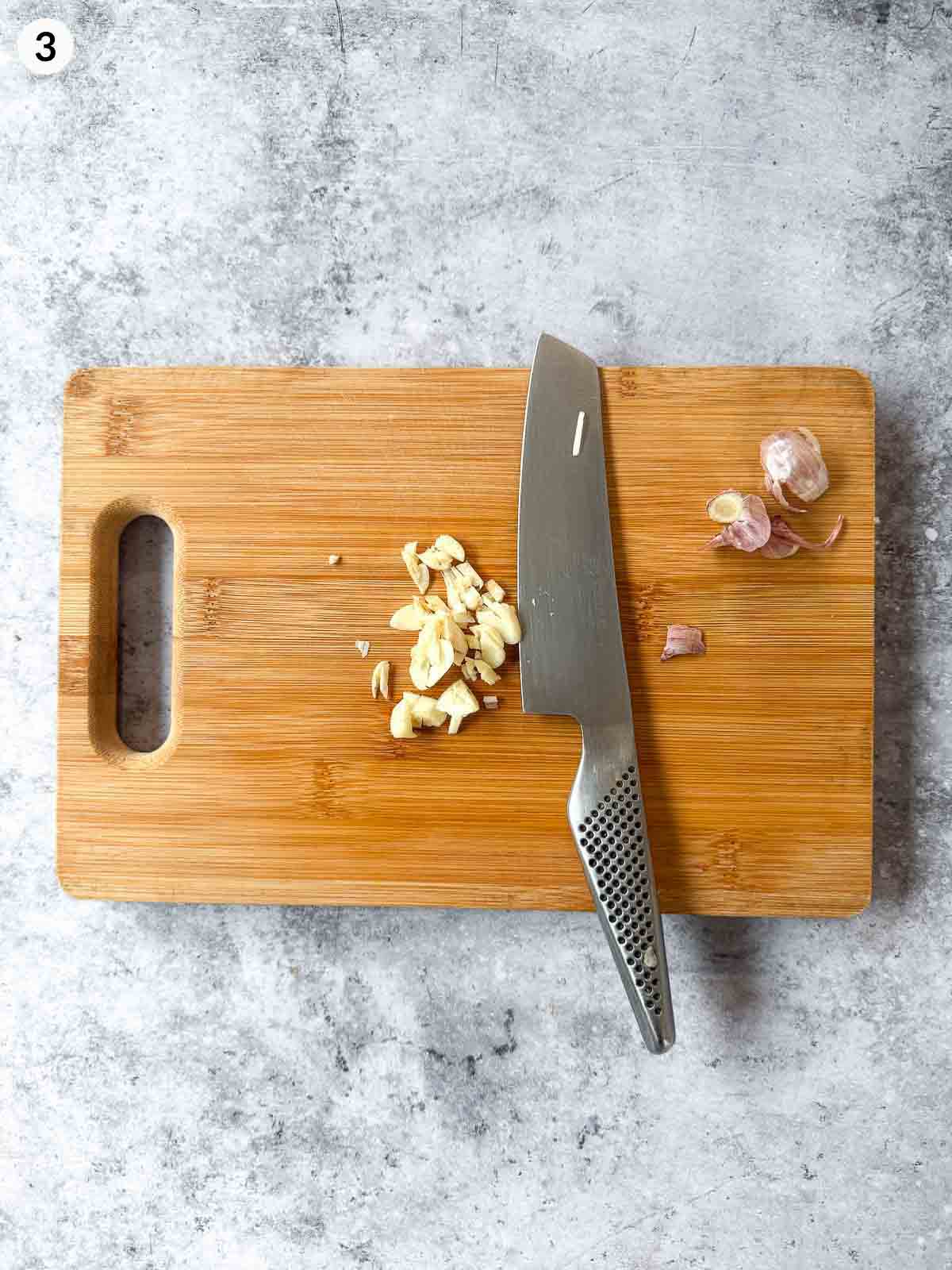
Garlic: One fresh clove, minced fine. Fresh garlic is essential here as pre-minced jarred garlic has a duller, more acidic flavour that will not integrate into the dressing the same way. Use a garlic press or mince finely with a knife.
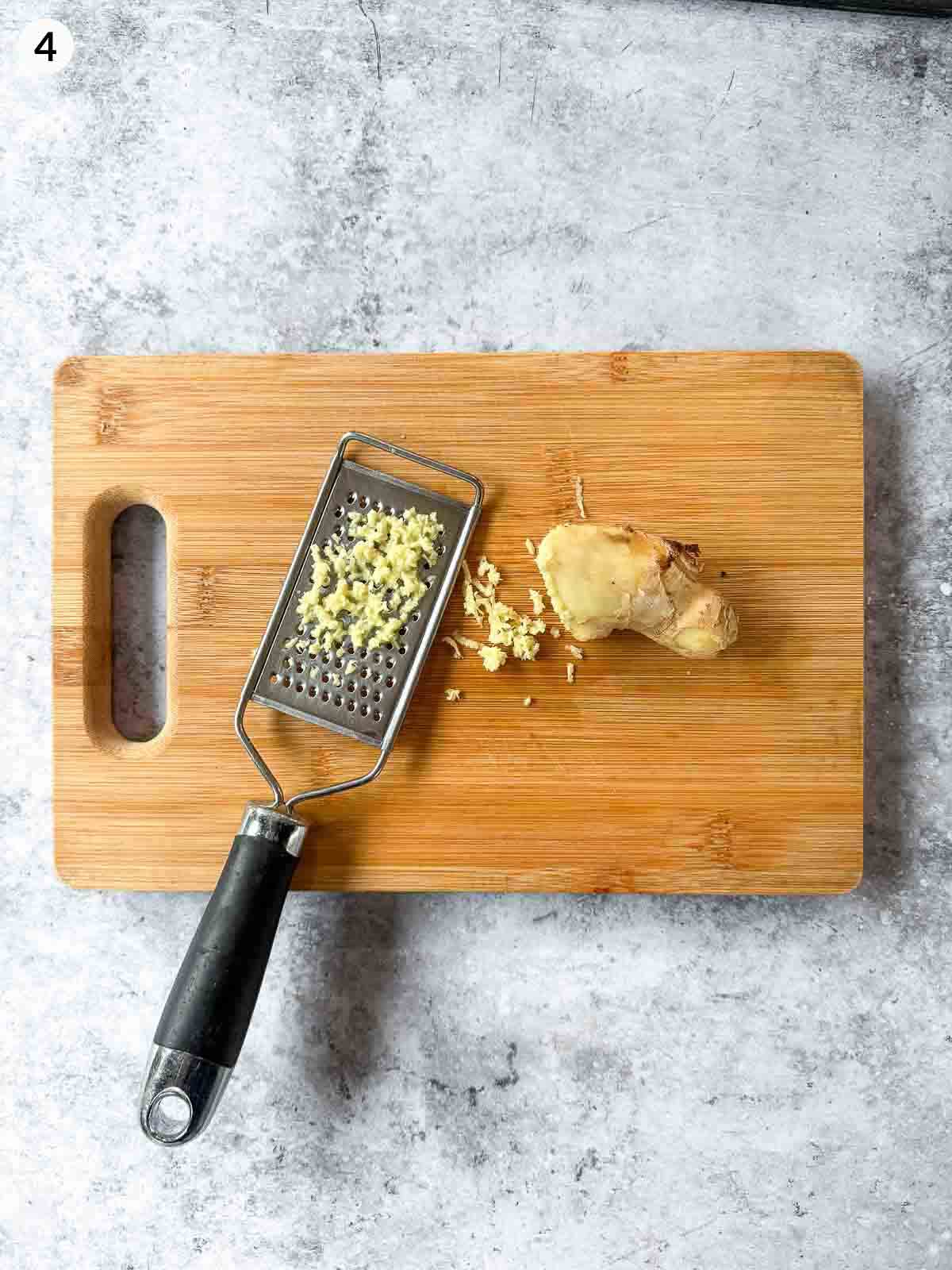
Ginger: Freshly grated ginger yields 1 tbsp. Look for ginger with tight, unwrinkled skin. Smooth skin means it is fresh and juicy. Older ginger becomes fibrous and dry.
Roasted White Sesame Seeds: These add a nutty warmth and textural finish. You can buy them pre-roasted from Asian grocery stores or supermarkets.
If you can only find raw sesame seeds, toast them yourself in a dry pan over medium heat for 2–3 minutes, stirring constantly, until lightly golden and fragrant.
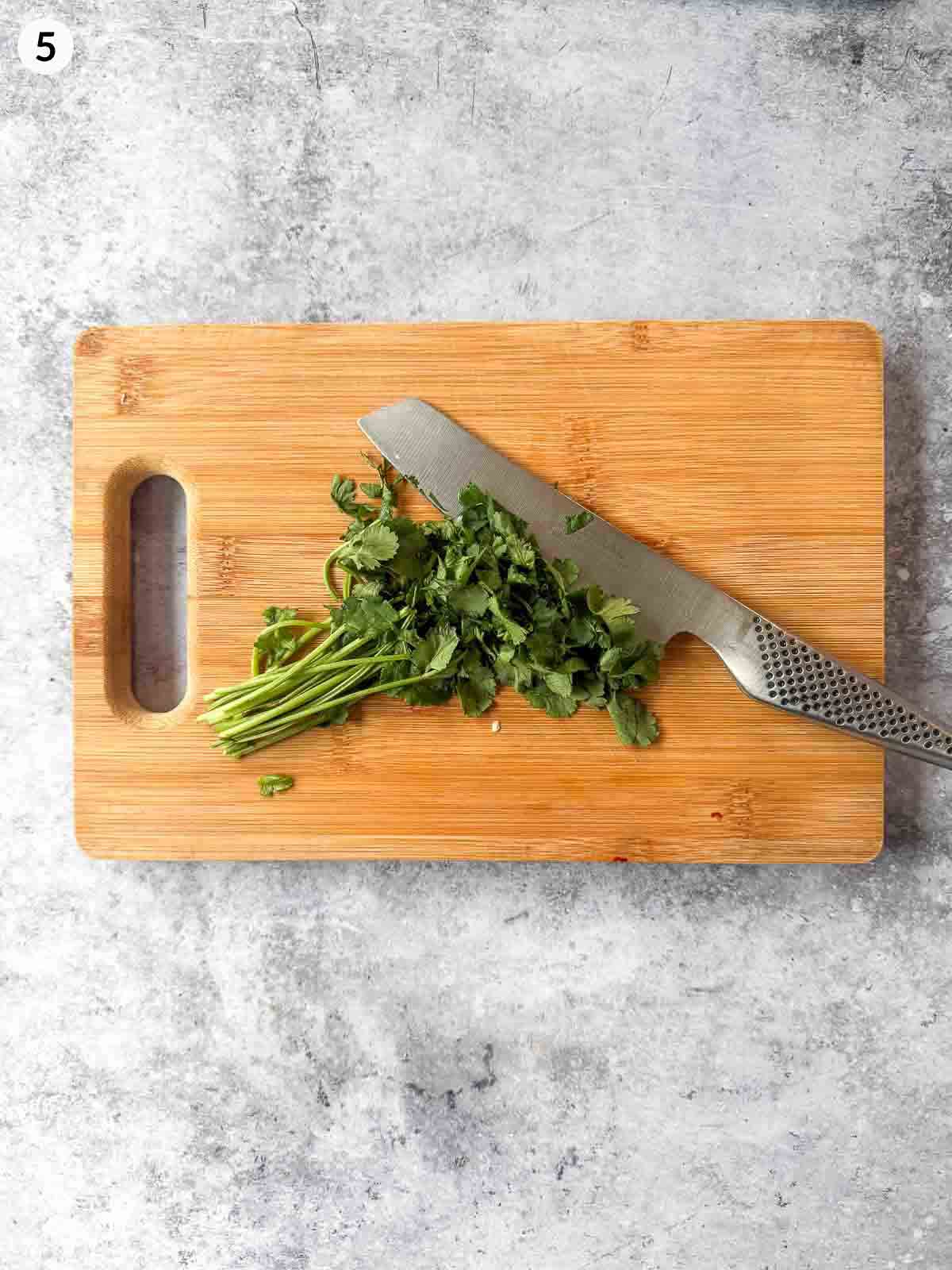
Coriander: Fresh coriander leaves add brightness and a slightly citrusy lift that balances the richness of the gochujang dressing. Buy it fresh and use it the day of if possible — it wilts quickly. If you are a coriander hater, Thai basil or spring onion are good alternatives.
Gochujang: The star of the dressing. A very common Korean ingredient that can be found in most supermarkets. This is a punchy paste so if you’ve never tried it before, add half first and adjust accordingly.
Rice Vinegar: Mild, slightly sweet, and essential for balancing the heat of the gochujang. Do not substitute white wine vinegar or apple cider vinegar — they are too sharp. Rice vinegar is inexpensive and available at any supermarket or Asian grocery store.
Soy Sauce: Use a light soy sauce rather than dark for this dressing. Dark soy is too intense and will overpower the other flavours. For a gluten free version, swap to tamari — it behaves identically in this recipe.
Sugar: Just two teaspoons to balance the heat and acidity. Plain white sugar works perfectly. You can substitute with honey or maple syrup for a slightly different flavour, or use a small amount of mirin if you have it on hand.
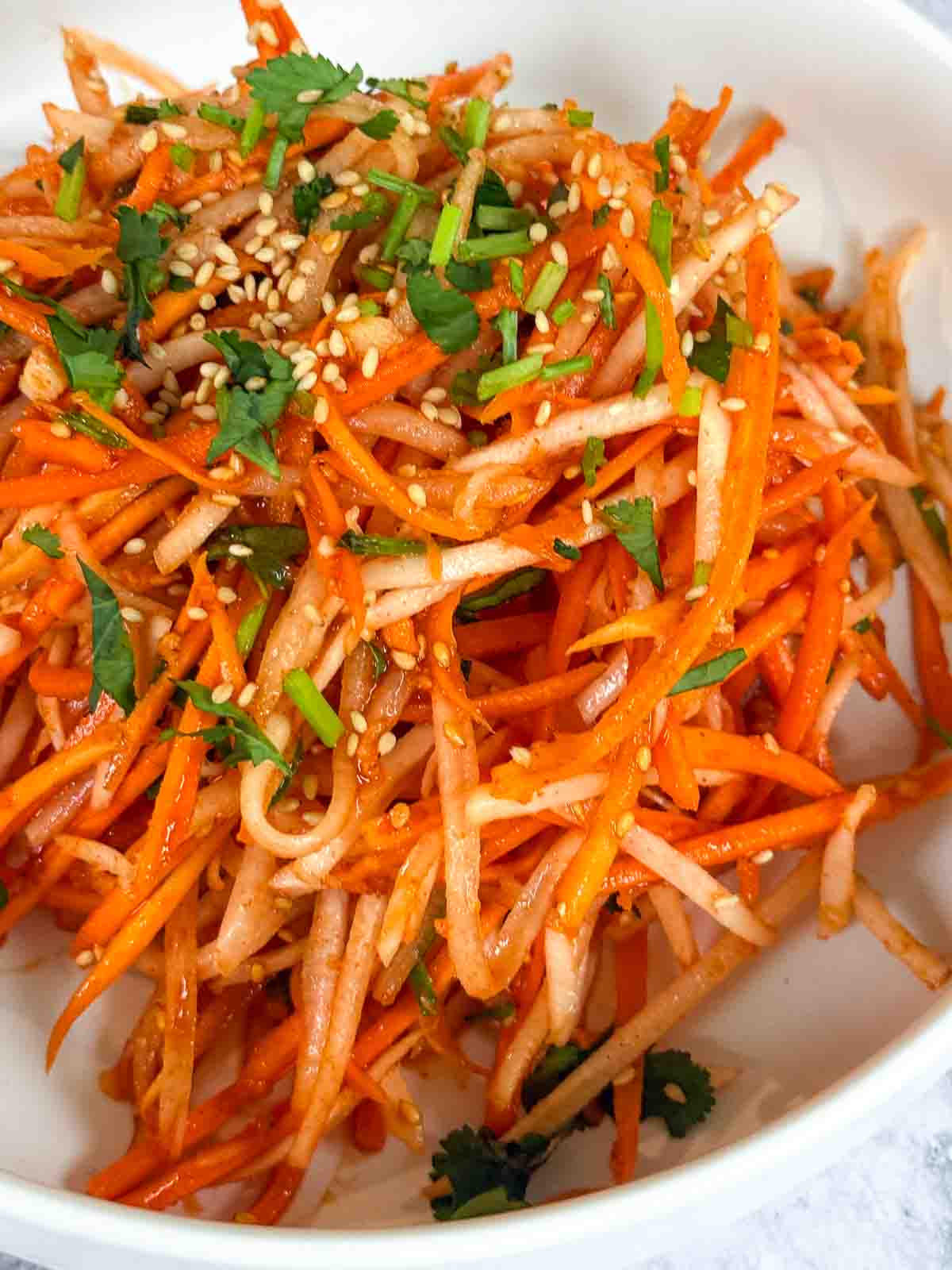
Shredded carrot, shredded daikon, minced garlic, grated ginger, roasted white sesame seeds, and fresh coriander. All tossed in a gochujang dressing of chilli paste, rice vinegar, soy sauce, and sugar.
Variations And Substitutions
Gluten free: Swap soy sauce for tamari. Everything else in this carrot daikon salad is naturally gluten free. For more gluten free inspiration, browse our Gluten Free Side Dishes.
Vegan: This recipe is fully vegan as written. See our full collection of Vegan Salad Recipes for more plant-based sides.
Coriander-free: Replace with thinly sliced spring onion, fresh mint, or Thai basil. All work well with the gochujang dressing.
Adjust the heat: Gochujang varies in spice level by brand. Start with half a tablespoon if you are heat-sensitive and taste as you go.
Add protein: This shredded carrot salad works brilliantly as a base for grilled chicken, pan-fried tofu, or a soft-boiled egg. It turns a side dish into a complete meal.
Make it nutty: Add a teaspoon of toasted sesame oil to the dressing for extra depth, or swap sesame seeds for crushed roasted peanuts.
Add cucumber: Thinly sliced or julienned cucumber adds extra freshness and makes this salad more substantial.
Sugar substitutes: Honey, maple syrup, or mirin all work as alternatives in the dressing.
How To Make for Carrot and Daikon Salad
Peel the carrot and daikon.
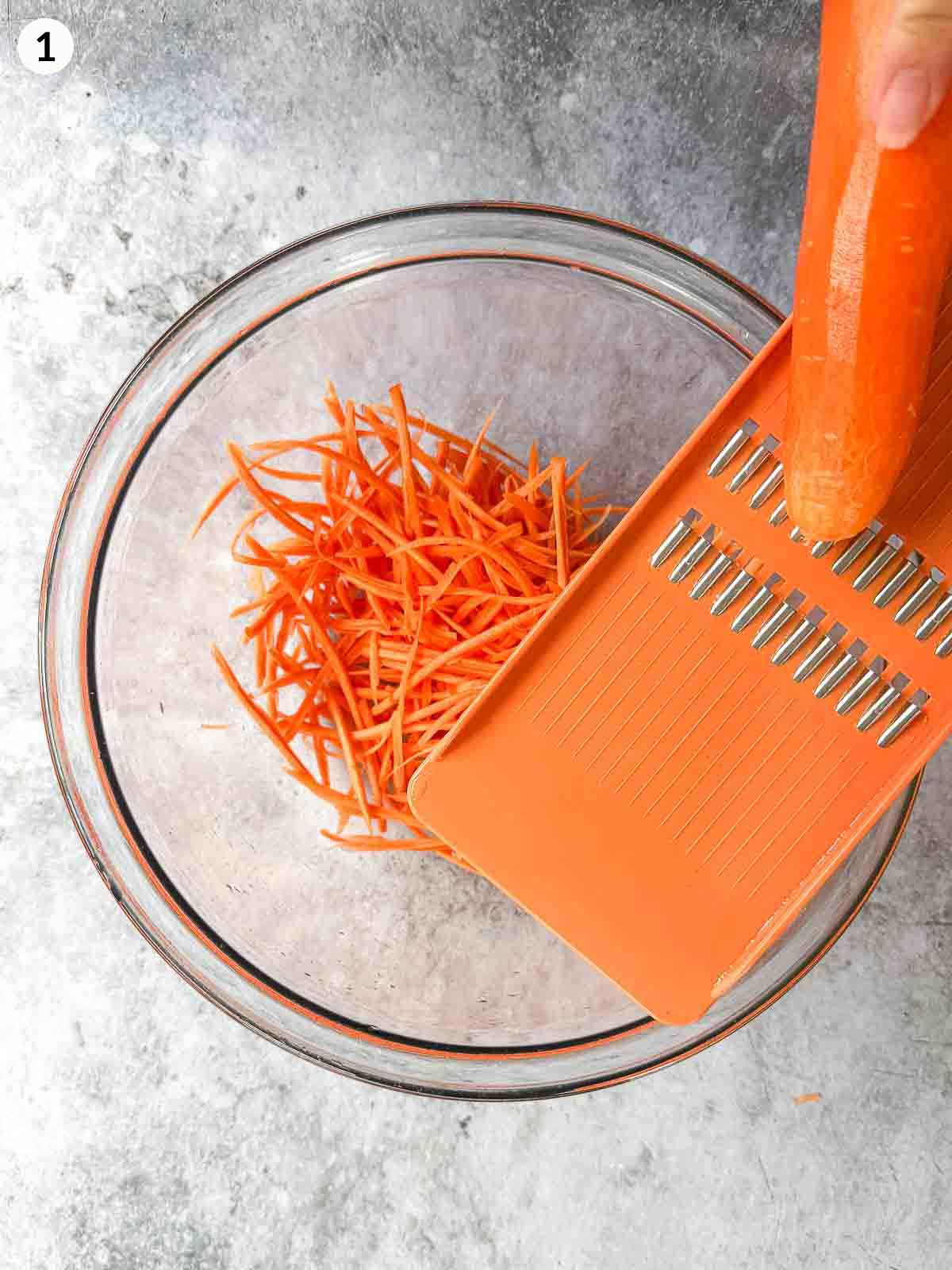
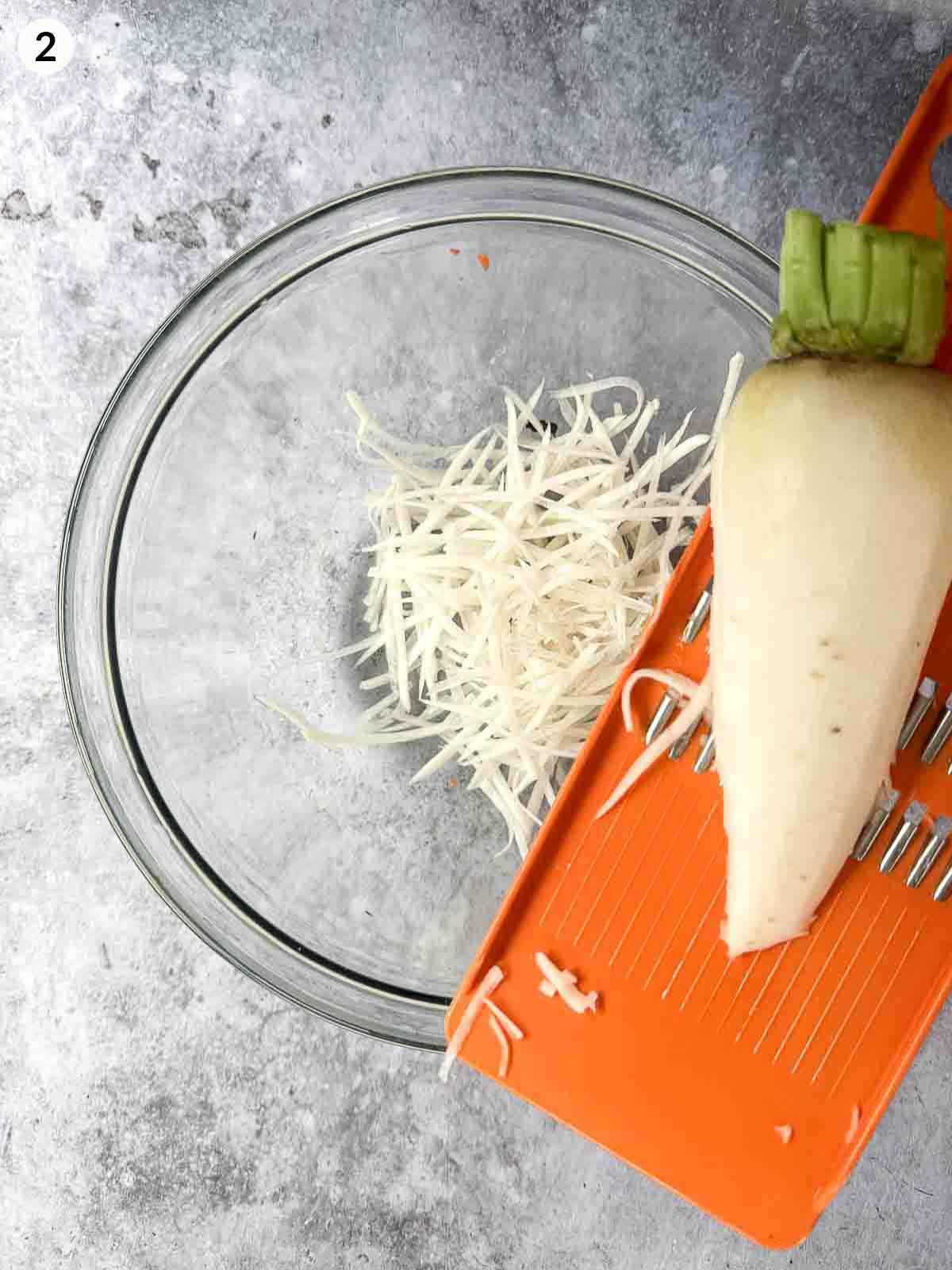
Using a mandolin, shred the carrot and daikon.
Mince 1 clove of garlic.
Grate ginger to yield 1 tbsp.
Roughly chop coriander leaves to yield 2 tbsp.
Mix all ingredients for the gochujang dressing.
Mix in minced garlic and grated ginger.
Add the rest of the ingredients and mix thoroughly.
Serve.
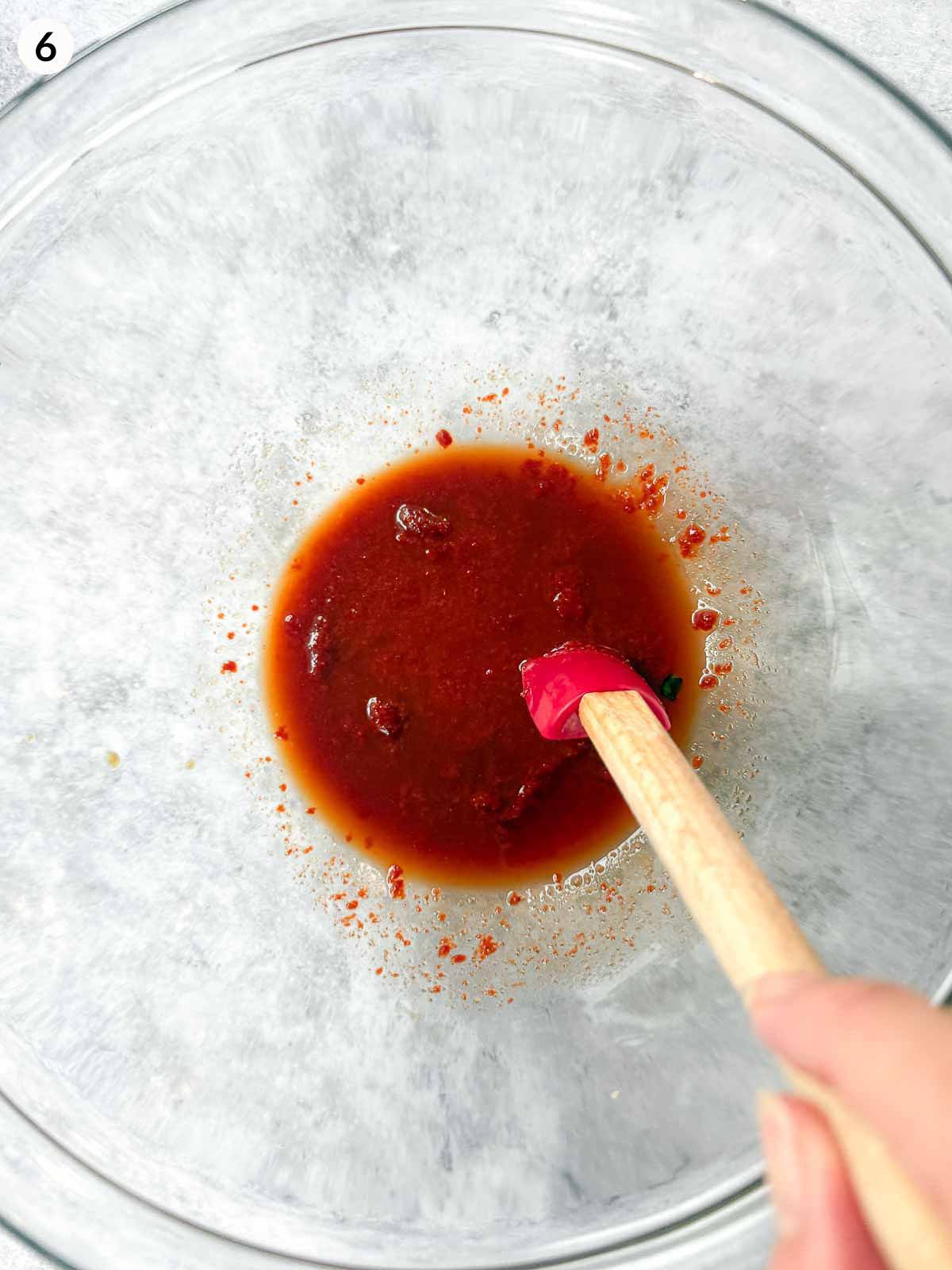
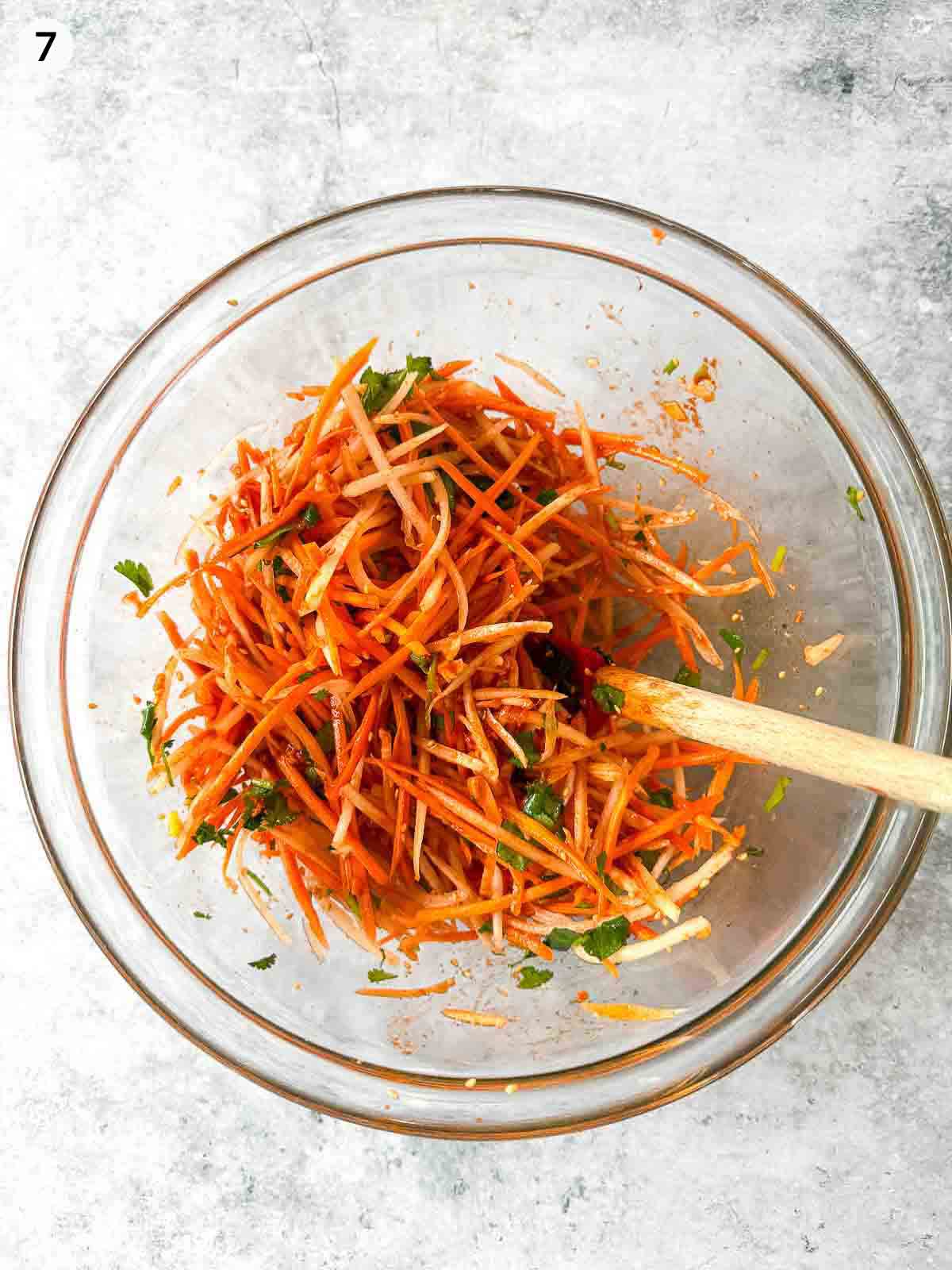
Peel and shred carrot and daikon using a mandoline. Mince garlic and grate ginger. Roughly chop coriander. Mix all dressing ingredients together, then stir in garlic and ginger. Add shredded vegetables, coriander, and sesame seeds. Toss thoroughly and serve.
How to Make This Salad Perfectly [Expert Tips]
Use a mandoline for the best texture: Finely and evenly shredded carrot and daikon are what give this salad its signature light, tangle-able texture. A mandoline makes this fast and consistent.
A box grater works too, but the strands will be shorter and the salad will feel denser.
Salt the daikon first if you have time: Daikon holds a lot of water. If you want a less watery salad, toss the shredded daikon with a pinch of salt, leave it for 10 minutes, then squeeze out the excess liquid before combining with the carrot.
This step is optional but makes a real difference to the final texture.
Taste the dressing before you dress the salad: Gochujang brands vary significantly in saltiness and heat.
Mix the dressing first, taste it, and adjust. It should be punchy, balanced, and slightly sweet. If it is too sharp, add a touch more sugar; if it is flat, add a splash more rice vinegar.
Dress just before serving: Once dressed, the vegetables will start to release moisture and soften. This carrot and daikon salad is at its best eaten immediately while everything is still crisp and fresh.
Let the garlic and ginger sit in the dressing for a few minutes: Mixing them into the dressing before adding the vegetables gives the raw garlic and ginger time to mellow slightly rather than tasting sharp and raw.
Mix the gochujang dressing and stir in the garlic and ginger first, then let it sit for 5–10 minutes before tossing through the salad. This short rest softens the raw edge of the garlic and allows the gochujang to open up, giving the dressing a more rounded, complex flavour throughout.
Frequently Asked Questions
Daikon is milder than the small red radishes you might be more familiar with. It has a gentle peppery flavour with a clean, fresh quality and a satisfying crunch. When raw and shredded, as in this daikon and carrot salad, it adds texture and freshness without dominating the other flavours.
It is best eaten fresh. If you want to prep ahead, shred the vegetables and mix the dressing separately, then combine just before serving. If you dress it too far in advance, the vegetables will soften and release water.
Yes, this carrot and daikon salad is fully vegan as written. For more vegan side dish ideas, head to our Vegan Side Dishes collection.
Most gochujang pastes are mild to medium — warm rather than fiery. The heat builds gradually. If you are sensitive to spice, start with half a tablespoon and adjust from there.
Yes. Tube gochujang is the same product in a more convenient format. The flavour is identical — just squeeze and measure the same way.
This shredded carrot salad works beautifully as Korean-inspired banchan alongside rice, grilled meat, or fish. It is also great stuffed into a rice paper roll or served alongside our Japanese Sesame Green Beans for a full Asian-inspired spread.
This carrot and daikon salad has been made and refined in our kitchen to get the gochujang dressing balance just right. We are passionate about bringing bold, Asian-inspired flavours to the side dish table, and this one earns its place every time. Quick, vibrant, and packed with flavour — it is exactly the kind of simple carrot salad recipe we love to share.

FEED YOUR FOMO! For more sides and salads, subscribe to our newsletter or follow us on Facebook, Instagram, Pinterest and YouTube to get our latest updates.
Carrot and Daikon Salad with Gochujang Dressing
Ingredients
Salad
- 1 carrot, shredded
- 1 daikon, shredded
- 1 garlic clove, minced
- 1 tbsp ginger, grated
- 1 tbsp white sesame seeds, toasted
- 2 tbsp coriander, (cilantro) roughly chopped
Salad Dressing
- 1 tbsp gochujang
- 1 tbsp rice wine vinegar
- 2 tsp soy sauce
- 2 tsp sugar
Click on the toggle below for conversion to US Cooking Units.
Instructions
- Peel the carrot and daikon.
- Using a mandolin, shred the carrot and daikon.
- Mince 1 clove of garlic.
- Grate ginger to yield 1 tbsp.
- Roughly chop coriander leaves to yield 2 tbsp.
- Mix all ingredients for the gochujang dressing.
- Mix in minced garlic and grated ginger.
- Add the rest of the ingredients and mix thoroughly.
- Serve.
Notes
- Gluten free: Swap soy sauce for tamari. Everything else in this carrot daikon salad is naturally gluten free. For more gluten free inspiration, browse our Gluten Free Side Dishes.
- Vegan: This recipe is fully vegan as written. See our full collection of Vegan Salad Recipes for more plant-based sides.
- Coriander-free: Replace with thinly sliced spring onion, fresh mint, or Thai basil. All work well with the gochujang dressing.
- Adjust the heat: Gochujang varies in spice level by brand. Start with half a tablespoon if you are heat-sensitive and taste as you go.
- Add protein: This shredded carrot salad works brilliantly as a base for grilled chicken, pan-fried tofu, or a soft-boiled egg. It turns a side dish into a complete meal.
- Make it nutty: Add a teaspoon of toasted sesame oil to the dressing for extra depth, or swap sesame seeds for crushed roasted peanuts.
- Add cucumber: Thinly sliced or julienned cucumber adds extra freshness and makes this salad more substantial.
- Sugar substitutes: Honey, maple syrup, or mirin all work as alternatives in the dressing.
- Use a mandoline for the best texture: Finely and evenly shredded carrot and daikon are what give this salad its signature light, tangle-able texture. A mandoline makes this fast and consistent. A box grater works too, but the strands will be shorter and the salad will feel denser.
- Salt the daikon first if you have time: Daikon holds a lot of water. If you want a less watery salad, toss the shredded daikon with a pinch of salt, leave it for 10 minutes, then squeeze out the excess liquid before combining with the carrot. This step is optional but makes a real difference to the final texture.
- Taste the dressing before you dress the salad: Gochujang brands vary significantly in saltiness and heat. Mix the dressing first, taste it, and adjust. It should be punchy, balanced, and slightly sweet — if it is too sharp, add a touch more sugar; if it is flat, add a splash more rice vinegar.
- Dress just before serving: Once dressed, the vegetables will start to release moisture and soften. This carrot and daikon salad is at its best eaten immediately while everything is still crisp and fresh.
- Let the garlic and ginger sit in the dressing for a few minutes: Mixing them into the dressing before adding the vegetables gives the raw garlic and ginger time to mellow slightly rather than tasting sharp and raw.
Nutrition
*Disclaimer: Nutritional information provided is an estimate only and generated by an online calculator.
Hey there! We’re The Sidesmith!

Phenie
I tell the stories behind our recipes and capture the bits that make us human.

Sammy
I create delicious sides, often Asian-inspired. Easy for everyday meals or great for entertaining.

Amy
Love turning everyday salads and sides into fancy recipes jammed packed with flavour!



GRAB YOUR SUMMERTIME ECOOKBOOK NOW!
New Summertime Recipes
Be summer ready and get our new Summertime Sides & Salads eCookbook! These are all exclusive, never seen before recipes. They are all tried and tested with everyday easy to find ingredients and yet are restaurant quality in style. Get your copy today!