
Ezme Salad – Bold Turkish Tomato Salad with Aleppo Pepper
Ezme salad is a bold Turkish tomato salad with capsicum, herbs, pomegranate molasses and Aleppo pepper. No cook, ready in 15 minutes and packed with flavour.
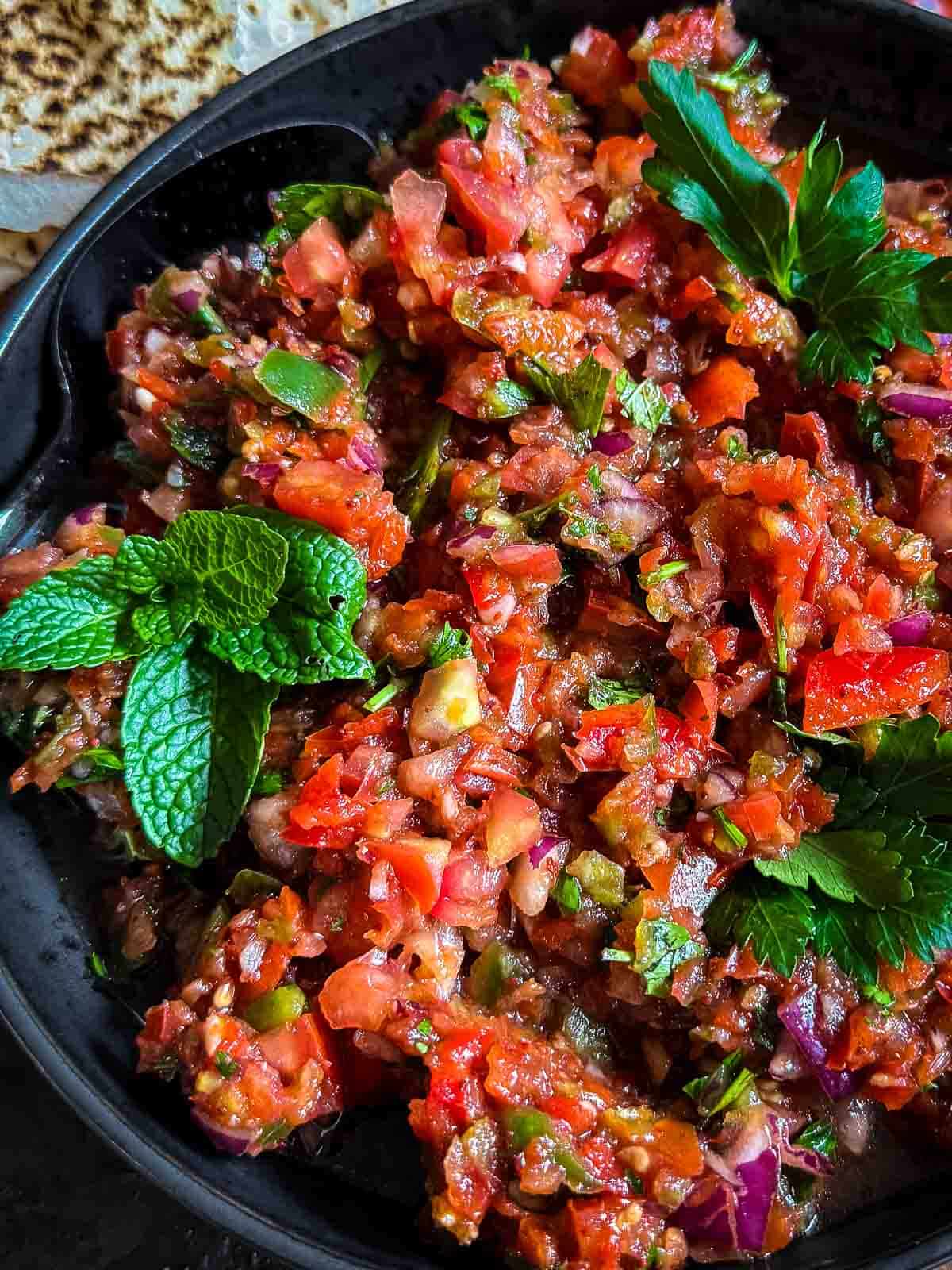
The Turkish Salad That Tastes Like Nothing Else You’ve Ever Made
Ezme salad is one of Turkey’s most beloved and iconic dishes — and once you taste it, you will understand exactly why.
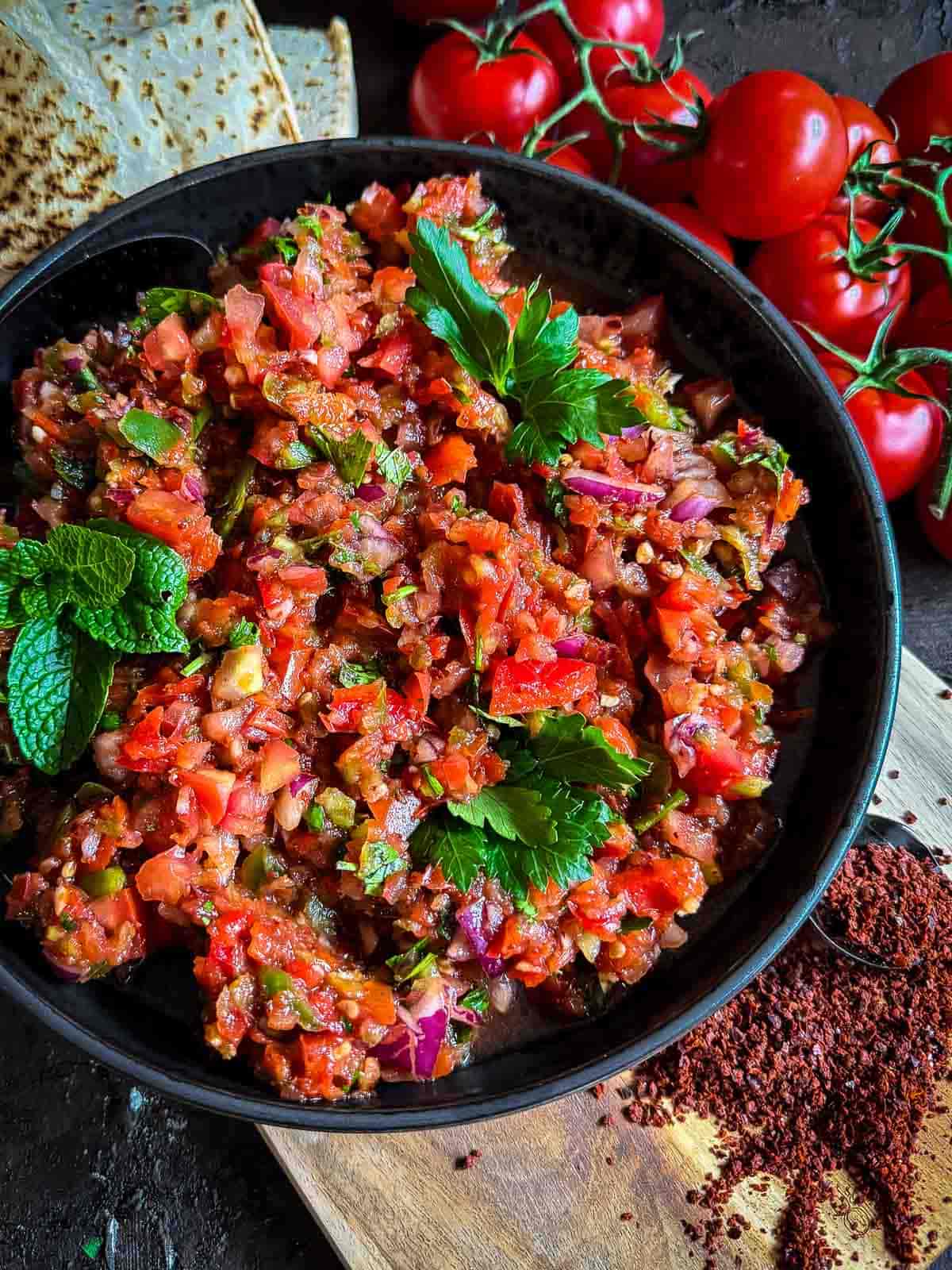
Finely chopped tomatoes, red and green capsicum, red onion, fresh parsley, and mint come together in a deeply flavoured dressing of pomegranate molasses, Aleppo pepper, sumac, and garlic to create something that sits beautifully between a salad, a sauce, and a dip.
It is smoky, tangy, herby, and just the right amount of spicy — a Turkish salad unlike anything else on the table.
What makes this acılı ezme recipe so special is the way the ingredients are prepared.
Rather than simply tossing everything together, the vegetables are pulsed in a food processor and then hand-chopped on a board to achieve that signature chunky, almost jammy consistency that is the hallmark of a great ezme.
This technique, part chopped, part crushed, releases the juices of the vegetables into the dressing in a way that slicing alone never achieves. The result is intensely flavoured, cohesive, and deeply satisfying.
If you love bold Middle Eastern flavours, this sits alongside our Balela Salad and Roasted Chickpea and Carrot Baharat Salad as a must-make.
The best part is that despite those complex, layered flavours, this Turkish ezme salad takes just 15 minutes from start to finish with zero cooking required.
Make it once and you will find yourself coming back to it constantly, as a side dish, a dip with flatbread, or a sauce spooned over grilled meat. It is that versatile, and that good.
Aleppo Pepper and Salçası: The Two Ingredients That Make This Ezme Authentic
There are two ingredients in this recipe that separate a genuinely authentic acılı ezme from a pale imitation, and both are worth seeking out.
The first is Aleppo pepper, known in Turkish as pul biber, which is a mildly hot, fruity, oily chilli flake with a deep red colour and a complex flavour that sits somewhere between sun-dried tomato and chilli.
Unlike standard chilli flakes, Aleppo pepper has a low to medium heat level with a distinct fruitiness and subtle saltiness that makes it far more nuanced and flavourful.
It is one of the most important spices in Turkish and Levantine cooking and is what gives ezme its characteristic warmth.
The second is salçası, a rich, deeply reduced Turkish tomato paste that is far more concentrated and flavourful than standard supermarket tomato paste.
It has a slightly fermented, almost umami quality that adds enormous depth to the dressing. Both are available at Middle Eastern and Turkish grocery stores, and increasingly online.
They are worth finding. If you enjoy cooking with bold Middle Eastern condiments, our Pomegranate Molasses Dressing is another great way to explore this flavour territory.
A no-cook Turkish tomato salad of finely processed capsicum, tomato, onion, parsley, and mint in a dressing of salçası, pomegranate molasses, Aleppo pepper, sumac, garlic, lemon, and olive oil. Ready in 15 minutes. Vegan, gluten free, and dairy free. Works as a salad, dip, or sauce.
Recipe Overview
Flavour/Texture: Bold, smoky, tangy, and herby with a gentle building heat from the Aleppo pepper.
The texture is chunky and jammy and not a salad you eat with a fork so much as one you scoop with flatbread or spoon alongside grilled meat.
The pomegranate molasses adds a sweet-tart richness, the sumac brings citrusy brightness, and the fresh herbs keep everything lively and aromatic. It is complex, layered, and completely addictive.
Ease: The food processor does the hard work for you. Pulse, chop, mix, dress.
The only technique worth mastering is the pulse-and-chop method for the vegetables, and the instructions walk you through exactly what to aim for.
If you have a food processor and a chopping board, you can make this ezme perfectly on your first attempt. No cooking, no stress.
Time: Fifteen minutes from start to finish. The food processor speeds up the vegetable prep dramatically as without it you are looking at slightly more hand chopping. This is a genuine no-fuss recipe that delivers impressive results fast.
Ingredients for Ezme Salad
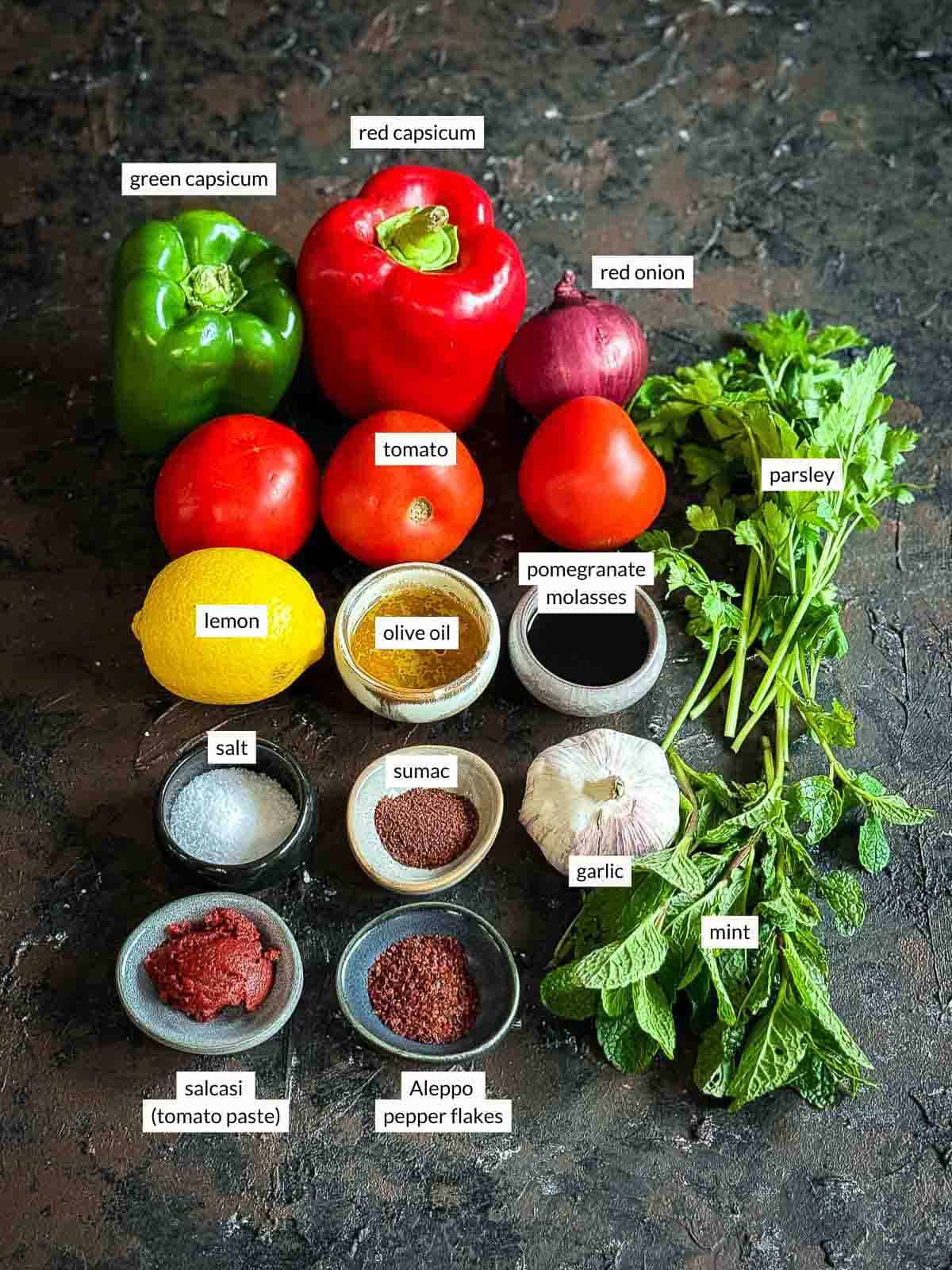
Red and Green Capsicum: Half a red capsicum adds sweetness and a fruity depth that balances the heat of the Aleppo pepper. The green capsicum brings a slightly more bitter, vegetal quality that adds complexity alongside the red.
Look for firm, glossy capsicum with no soft spots or wrinkled skin.
Red Onion: Red onion has a sharper, more pungent bite than brown onion and is the right choice for ezme. It holds its character even after being pulsed in the food processor. Look for firm, tight-skinned onions.
If you find raw onion very strong, you can soak the pulsed onion in cold water for a few minutes before adding — this mellows the harshness without losing the flavour entirely.
Flat-Leaf Parsley: Look for bright green, perky bunches, as yellowing means age. Use the leaves and tender stems for maximum flavour. It is one of the backbone herbs of Turkish cooking and non-negotiable in an authentic ezme salatası.
Mint: Just a tablespoon of fresh mint adds a lift of coolness and freshness that balances the richness of the pomegranate molasses and the depth of the salçası. Use leaves only, as mint stems can be slightly bitter.
Fresh is essential; dried mint is a completely different ingredient and will not work here.
Tomatoes: The tomatoes are the heart of this Turkish tomato salad. Use the ripest, most flavourful tomatoes you can find, such as Roma, vine-ripened, or any variety with full flavour and low water content.
Avoid tomatoes that are very watery, as the salad will become too wet.
The tomatoes are hand-chopped separately on a board rather than processed, which gives them a slightly different texture to the other vegetables and creates the signature chunky consistency of a great ezme.
Salçası — Turkish Tomato Paste: Salçası is a deeply reduced, concentrated Turkish tomato paste with a rich, slightly fermented, umami-forward flavour that standard supermarket tomato paste simply cannot replicate.
Find it at Turkish or Middle Eastern grocery stores, and it typically comes in a jar and is worth every bit of effort to track down.
Garlic: One fresh clove minced into the dressing. Mince as finely as possible so it distributes evenly throughout.
Pomegranate Molasses: The sweet, tart, syrupy backbone of the dressing. It adds a richness and depth that is distinctly Middle Eastern and works in perfect harmony with the Aleppo pepper and sumac.
Lemon: Please use fresh lemons and not the bottled variety, as it has a lot more depth.
Sumac: A tart, fruity, deep-red spice that adds a lemony brightness and distinctly Middle Eastern character to the dressing. It keeps well in a sealed jar for months and is one of those spices you will reach for constantly once you have it.
Aleppo Pepper Flakes / Pul Biber: Aleppo pepper is a mildly hot, fruity, oily chilli flake with a complex flavour that sits between sun-dried tomato and chilli.
It has a far more nuanced, rounded heat than standard chilli flakes. Find it at Middle Eastern or Turkish grocery stores.
Olive Oil: Added last and drizzled in slowly to emulsify the dressing.
Salt: Season to taste at the end. The salçası and pomegranate molasses both carry some saltiness, so taste before adding.
Red and green capsicum, red onion, flat-leaf parsley, and mint pulsed in a food processor. Hand-chopped ripe tomatoes. Dressed in salçası, minced garlic, pomegranate molasses, lemon juice, sumac, Aleppo pepper flakes, salt, and olive oil.
Variations And Substitutions
No salçası? Use a good quality double-concentrated tomato paste as a substitute. Add a tiny pinch of Aleppo pepper or dried chilli to the paste to approximate some of the depth. The flavour will be simpler but still good.
No Aleppo pepper? Standard chilli flakes will work at a pinch, but use half the quantity as they are significantly hotter and less fruity. Smoked paprika mixed with a small amount of chilli flakes is a closer approximation to the Aleppo pepper flavour profile.
Adjust the heat: One tablespoon of Aleppo pepper gives a medium warmth. Reduce to half a tbsp for a milder version. Increase for more heat. Worth noting that acılı ezme literally means “spicy ezme” in Turkish, so don’t be afraid to go bold.
No food processor? Fine-chop all the vegetables by hand on a large chopping board. It takes longer, but the result is similar. The goal is a finely chopped, almost crushed consistency, not a puree.
Serve it as a dip: Ezme works beautifully as a dip with warm pita or flatbread. It is a staple of Turkish mezze spreads alongside hummus and baba ghanoush.
Add walnuts: Some regional versions of ezme include finely chopped toasted walnuts for extra texture and nuttiness. Stir through just before serving.
Serve as a sauce: Spoon it over grilled lamb, chicken, or beef as a fresh, punchy sauce. It pairs especially well with our Sides for Lamb collection.
Instructions For How to Make Ezme Salad
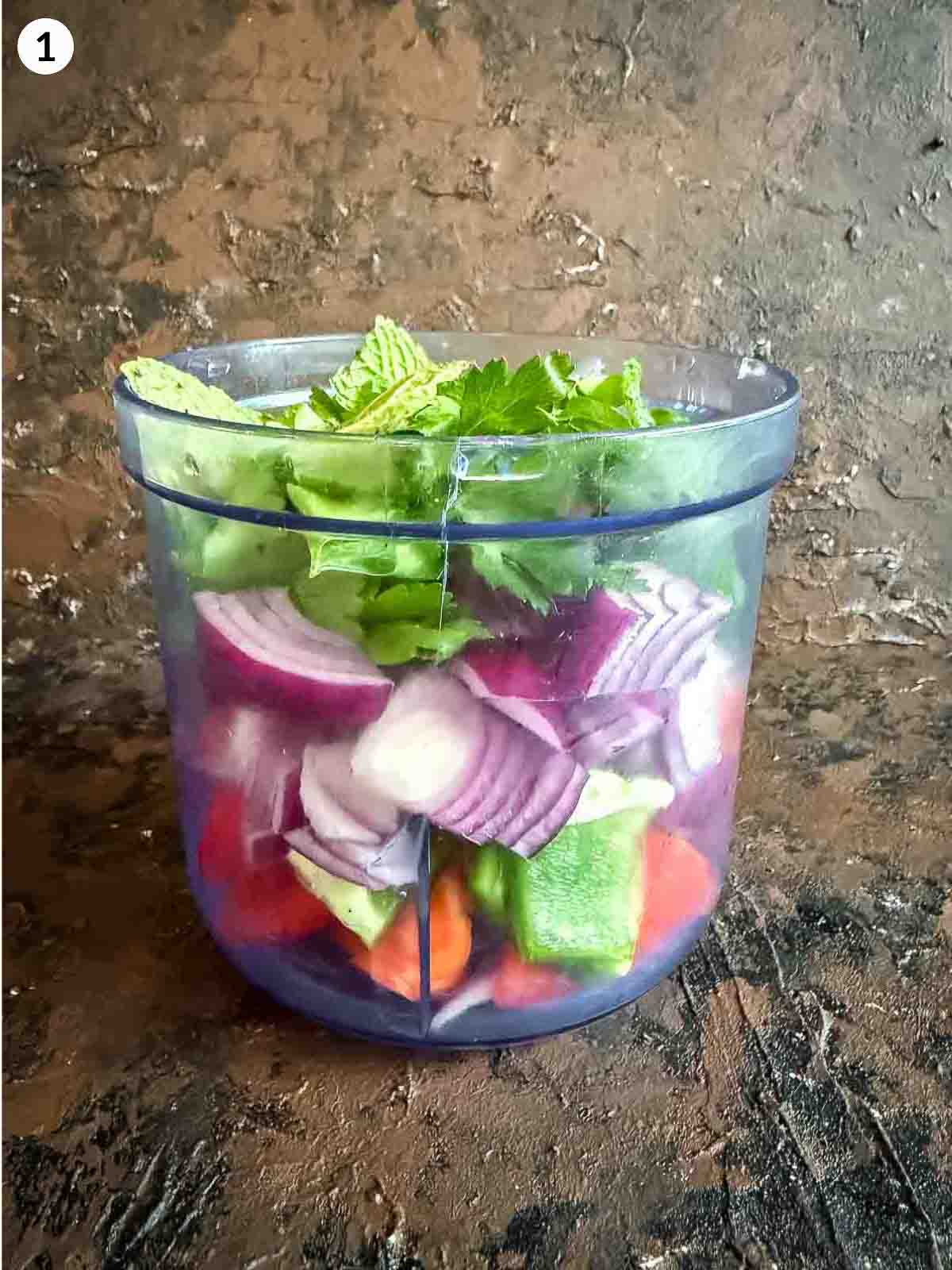
In a food processor, add all salad ingredients except the tomatoes.
Pulse the ingredients. You want it chopped, not pureed.
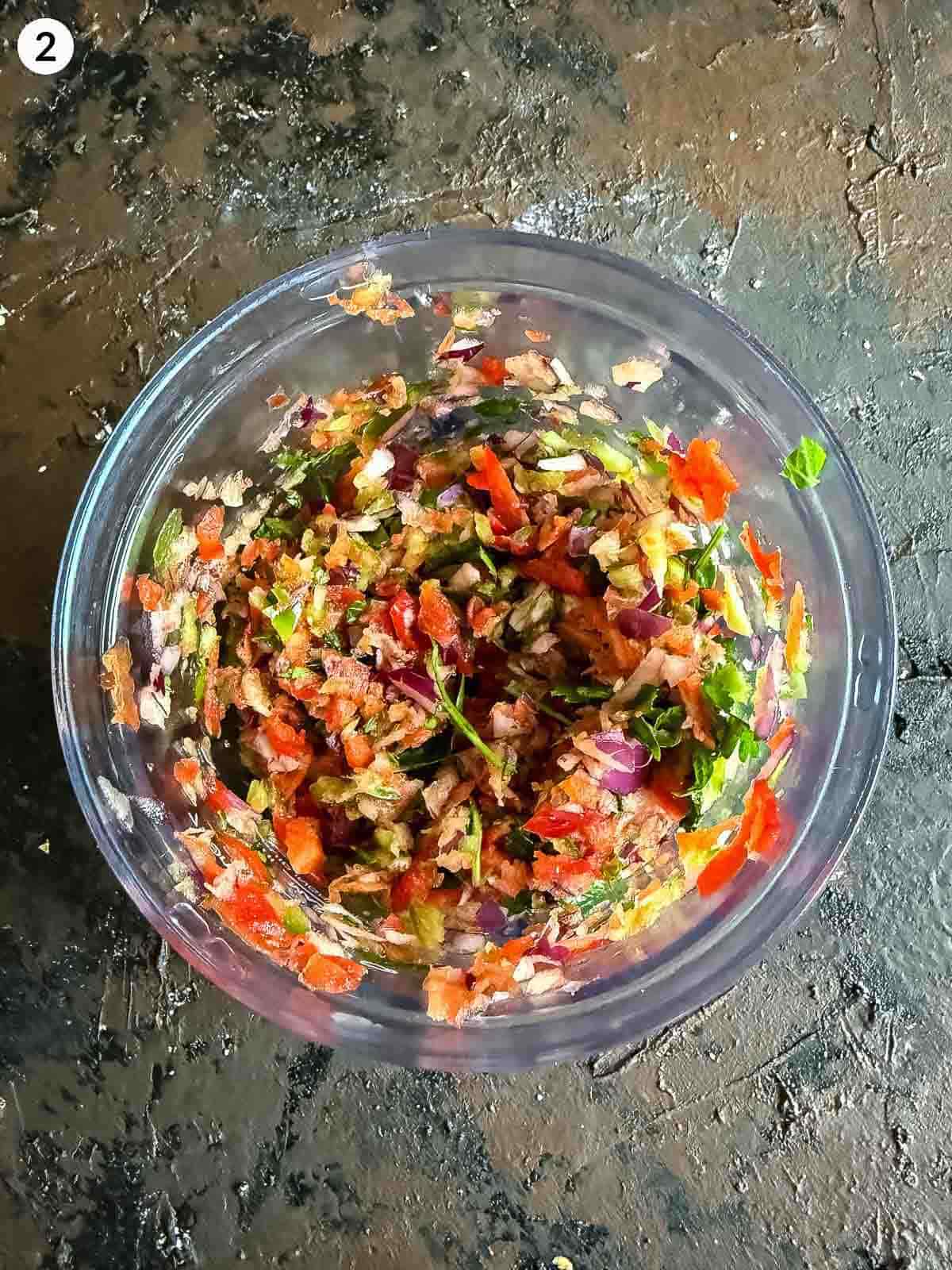
On a large chopping board, chop the tomatoes well.
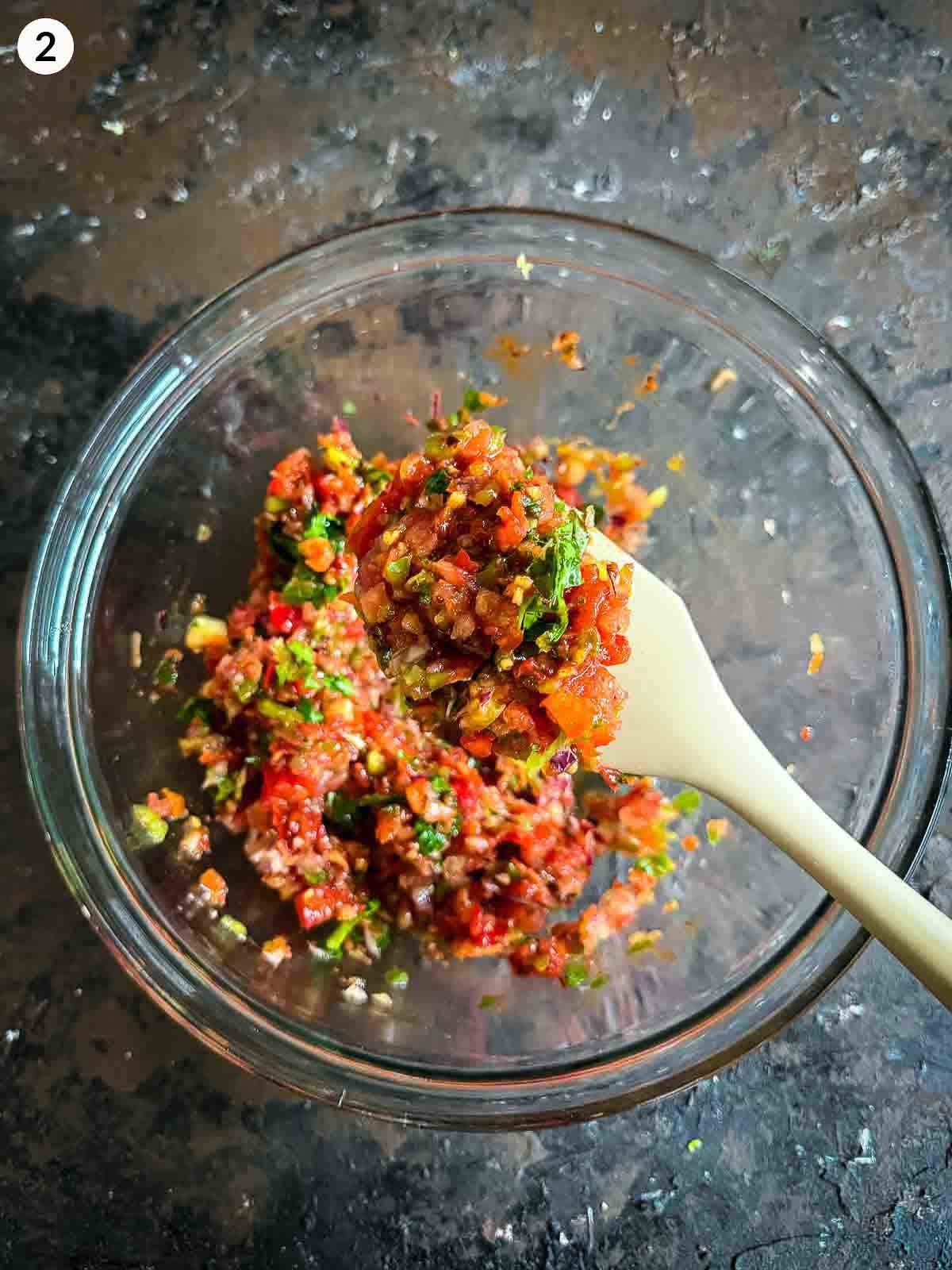
Slowly add ingredients from the food processor and chop together.
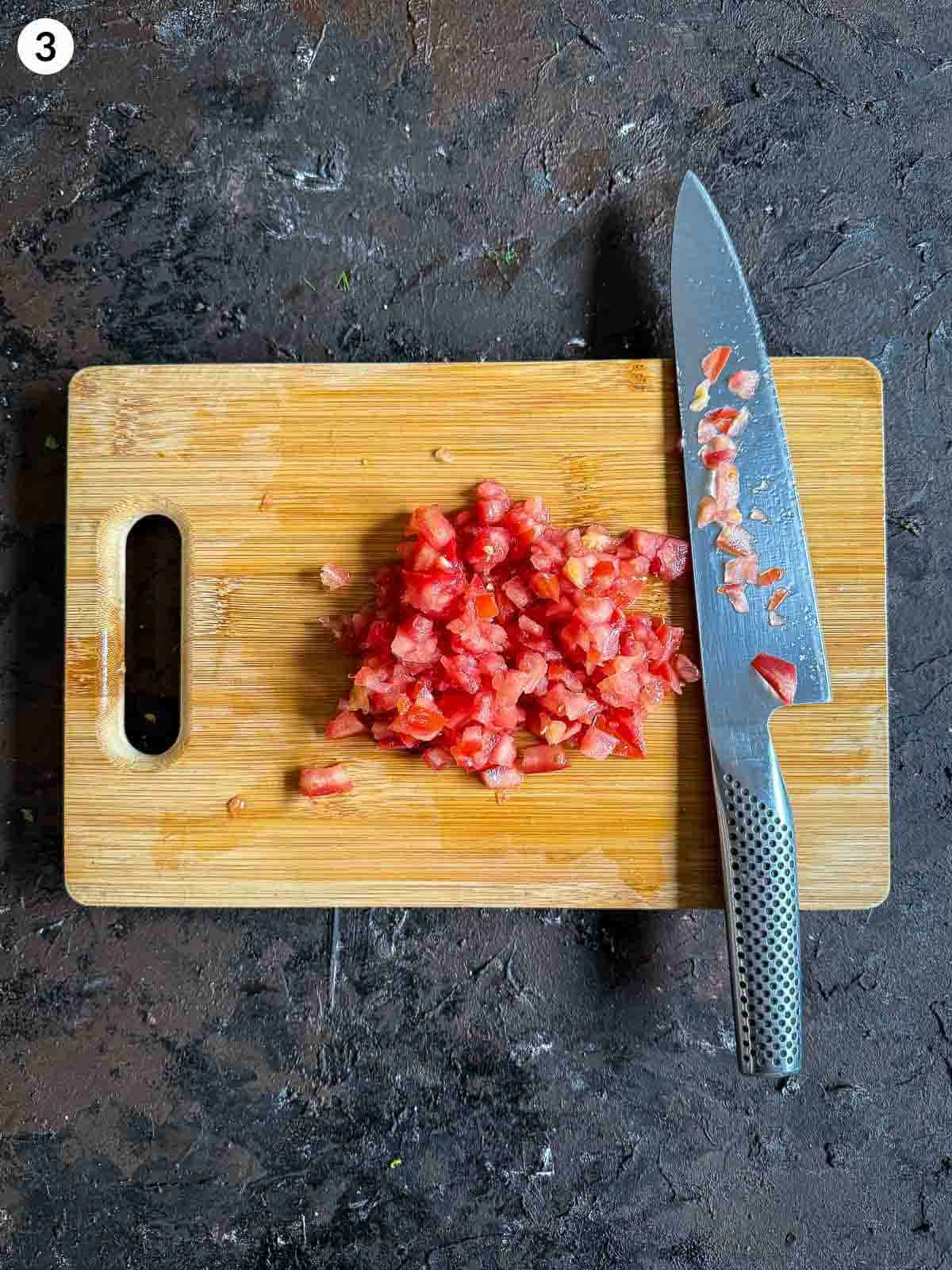
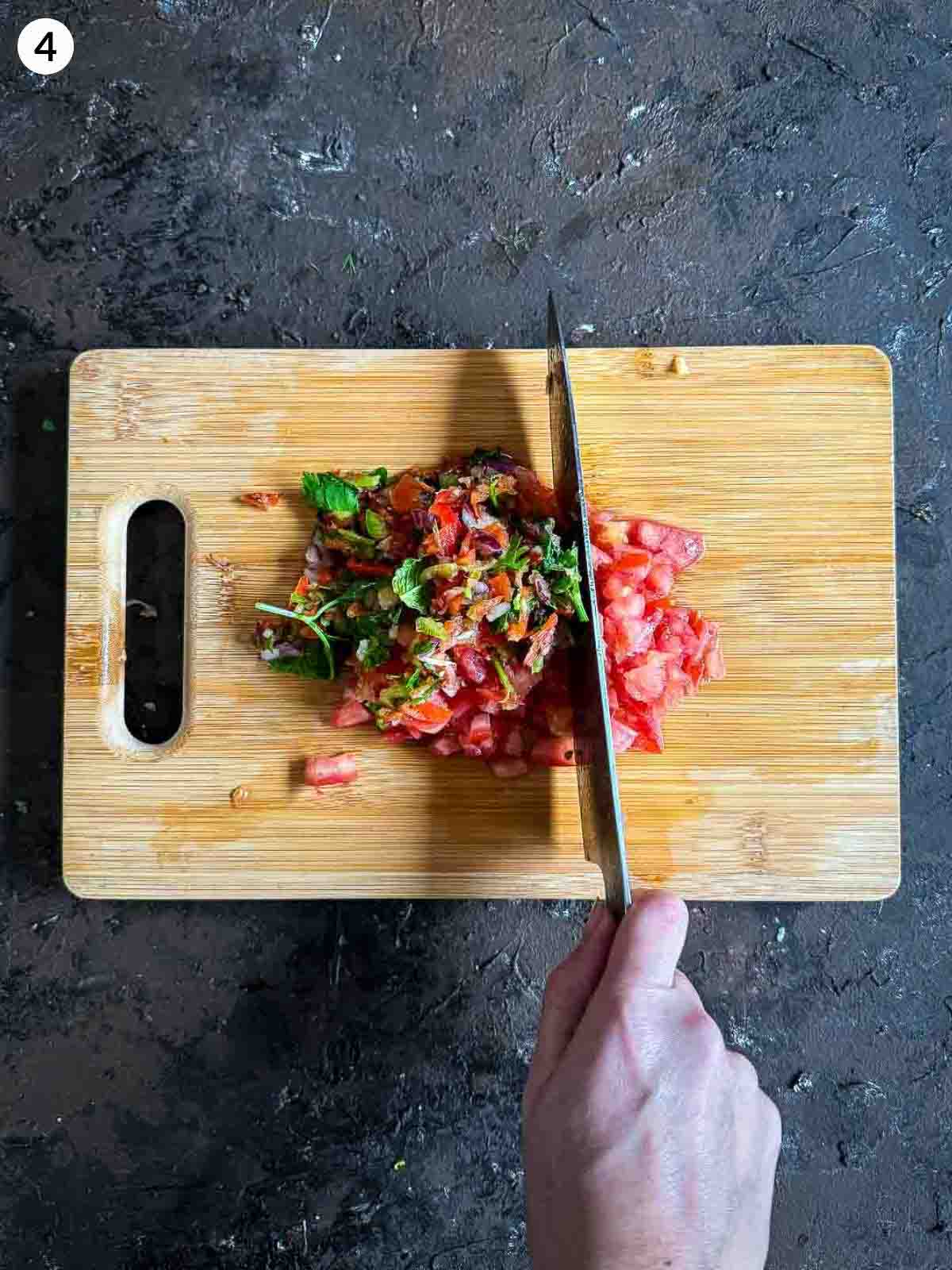
You’re after a chunky dip-like consistency.
How To Make Dressing for Ezme Salad
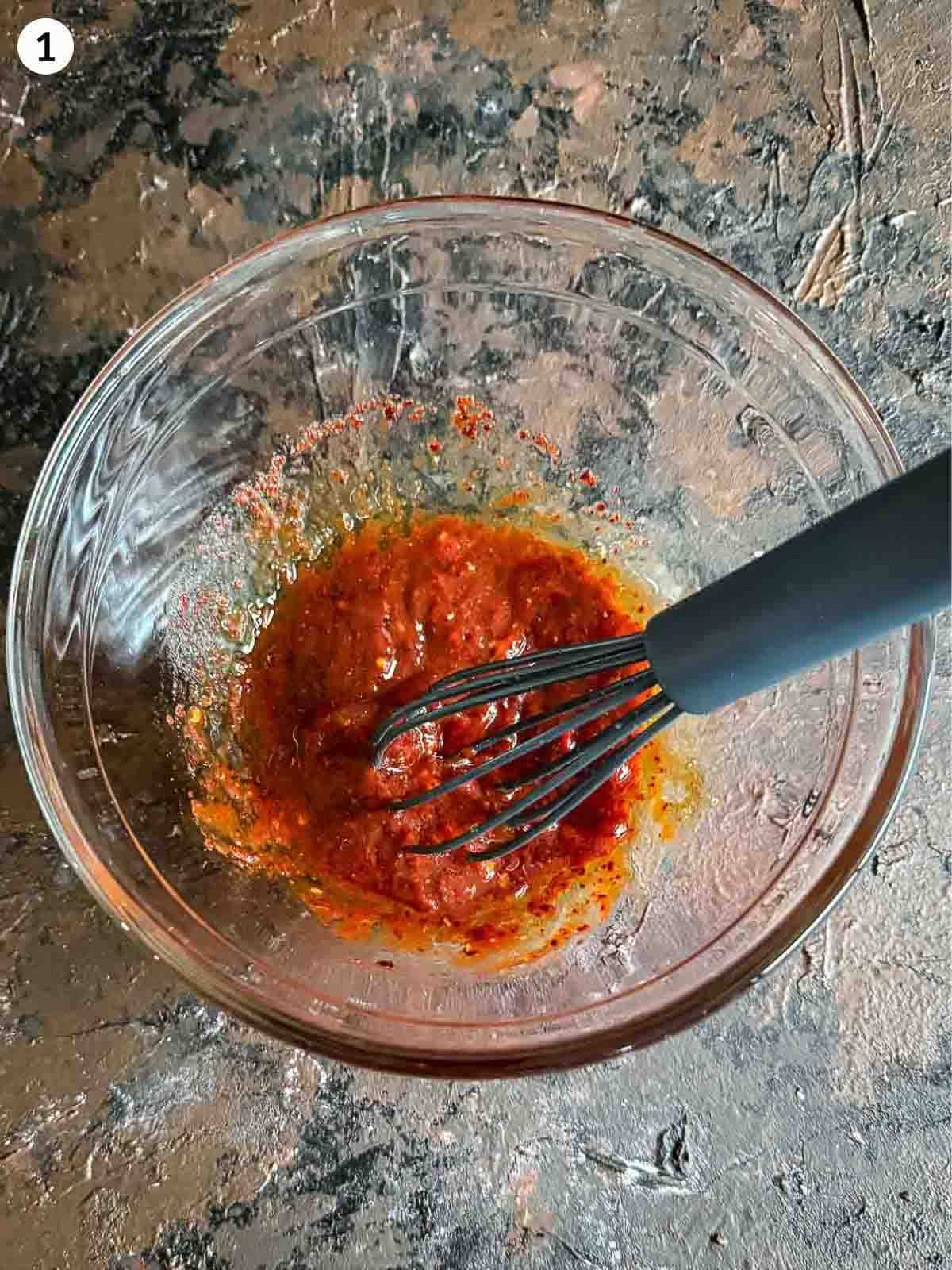
In a mixing bowl, add all ingredients except olive oil.
Mix ingredients and keep stirring as you drizzle the olive oil in slowly. This will help to emulsify the dressing properly.
How to Assemble Salad
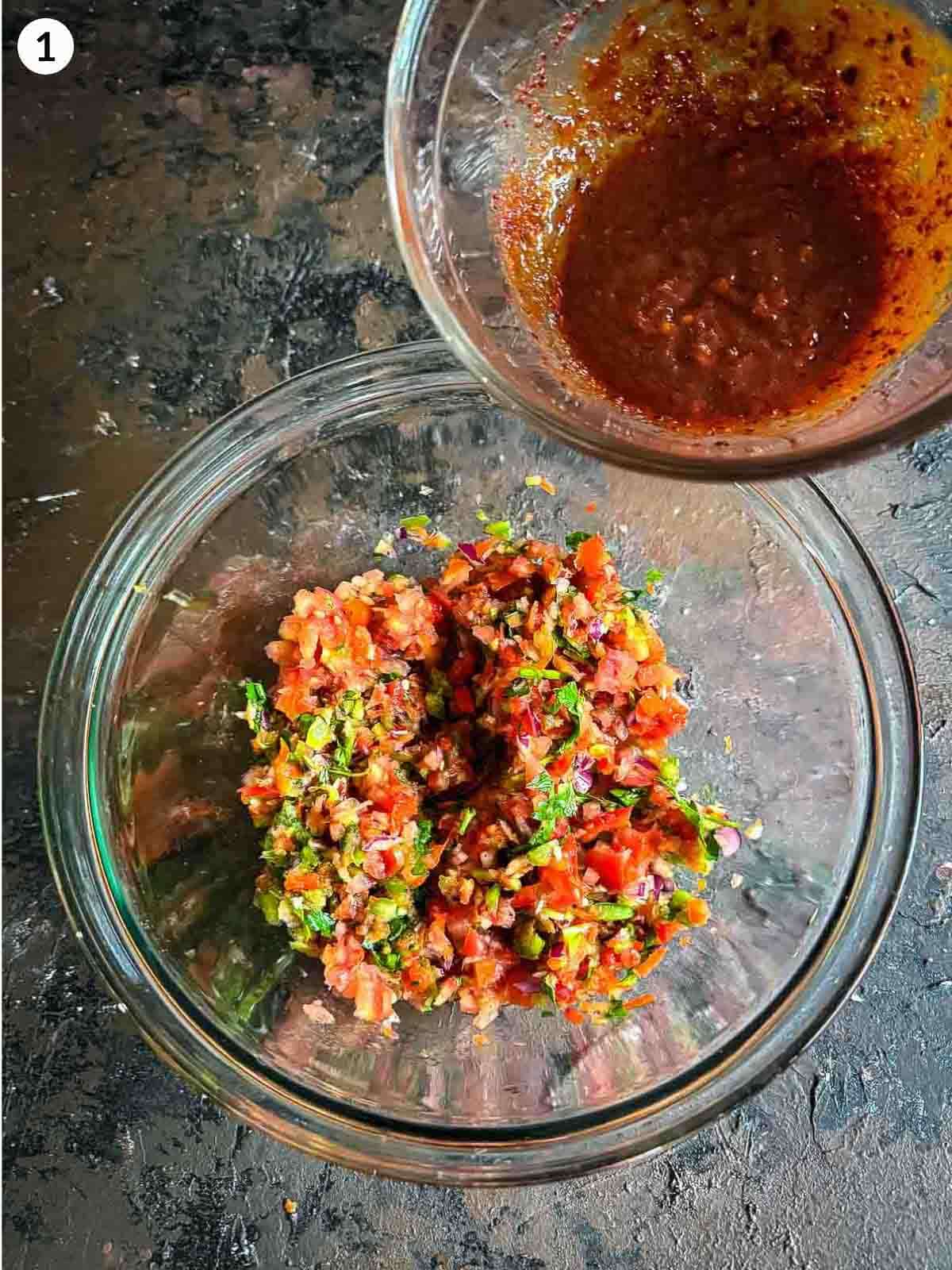
Add the chopped salad ingredients into the dressing mixing bowl.
Mix until well combined.
Serve.
Pulse capsicum, onion, and herbs in a food processor until finely chopped. Hand-chop tomatoes separately, then combine on a board to a chunky, dip-like consistency. Whisk dressing and emulsify with olive oil. Fold salad into dressing and serve.
How to Make This Salad Perfectly [Expert Tips]
Pulse, don’t puree: The food processor is a tool here, not a blender. You want the vegetables finely chopped with some texture remaining. Pulse in short bursts and check frequently. Over-processing turns everything into a wet mush that will not hold the dressing properly.
Chop the tomatoes by hand, separately: This is not a step to skip. Tomatoes processed in a food processor release too much liquid and lose all their texture.
Chopping them on a board and then combining with the other vegetables gives you the chunky, defined pieces that are characteristic of a great ezme salatası.
Drain excess liquid if needed: After chopping and mixing, if the vegetables have released a lot of moisture, tip everything into a fine mesh sieve and let it drain for a minute or two before adding the dressing. This keeps the ezme from becoming watery.
Emulsify the dressing properly: Drizzle the olive oil in slowly while stirring constantly. A properly emulsified dressing coats every piece of vegetable evenly and gives the ezme its glossy, cohesive appearance.
Let it rest if you can: Even 15–20 minutes of resting time allows the flavours to meld and deepen significantly.
The vegetables continue to release their juices into the dressing and the whole dish becomes more cohesive. If you are making it ahead, cover and refrigerate and give it a stir before serving.
Use the best tomatoes available: This is a raw tomato dish so the flavour of the tomatoes is front and centre.
Ripe, flavourful tomatoes make this recipe sing. Out-of-season, watery supermarket tomatoes will make it flat. If tomatoes are not at their best, use good quality canned whole tomatoes, drained and hand-chopped.
After pulsing the vegetables in the food processor, tip them onto the chopping board and let them sit for 2 minutes before adding the tomatoes. This allows some of the excess moisture to drain away naturally. Then chop everything together on the board. This final hand-chop step is what gives ezme its authentic chunky texture and is what separates a great version from a mediocre one.
Frequently Asked Questions
Ezme is a traditional Turkish salad-dip that sits somewhere between a finely chopped salad and a thick sauce. The name comes from the Turkish word “ezmek”, meaning to crush or mash.
It is made from finely processed vegetables, typically tomatoes, capsicum, and onion, with fresh herbs and a spiced dressing. Acılı ezme specifically refers to the spiced, chilli-forward version.
Acılı means spicy or hot in Turkish. Acılı ezme therefore translates as spicy ezme. Ut refers to the version that includes Aleppo pepper (pul biber) for heat, as opposed to milder regional variations.
Both, really, and that is part of what makes it so useful. It functions as a side salad, a dip with flatbread or pita, and a sauce spooned over grilled meat.
In Turkey, it is most commonly served as part of a mezze spread or alongside kebabs and grilled dishes.
Turkish and Middle Eastern grocery stores are your best bet. Some specialty food stores also carry it. It is also available online. It is worth seeking out as standard chilli flakes are a poor substitute for the flavour it brings.
Yes. Fine-chop all the vegetables by hand on a large chopping board. The goal is a very finely chopped, almost crushed texture, so use a large sharp knife and keep chopping until you get there.
Up to 2 days in an airtight container in the fridge. The vegetables will continue to release moisture and the flavours will deepen. Give it a stir and taste before serving and it may need a small adjustment of lemon or salt. It is arguably even better on day two.
It is a natural partner for grilled lamb, chicken kebabs, kofta, or any Middle Eastern-spiced meat. It is also excellent with warm flatbread or pita as a mezze dish.
Browse our Sides for Lamb and Sides for Chicken collections for more pairing ideas, or serve it alongside our Balela Salad for a full Middle Eastern spread.
This ezme salad recipe has been made and refined in our kitchen to get the balance of Aleppo pepper, pomegranate molasses, and sumac exactly right. We are passionate about bringing the bold, deeply flavoured dishes of Turkish and Middle Eastern cuisine to home cooks everywhere, and this acılı ezme does exactly that. No cook, 15 minutes, and a recipe with flavour so complex and layered that people will ask you how you made it.
More Middle Eastern Inspired Sides and Salads
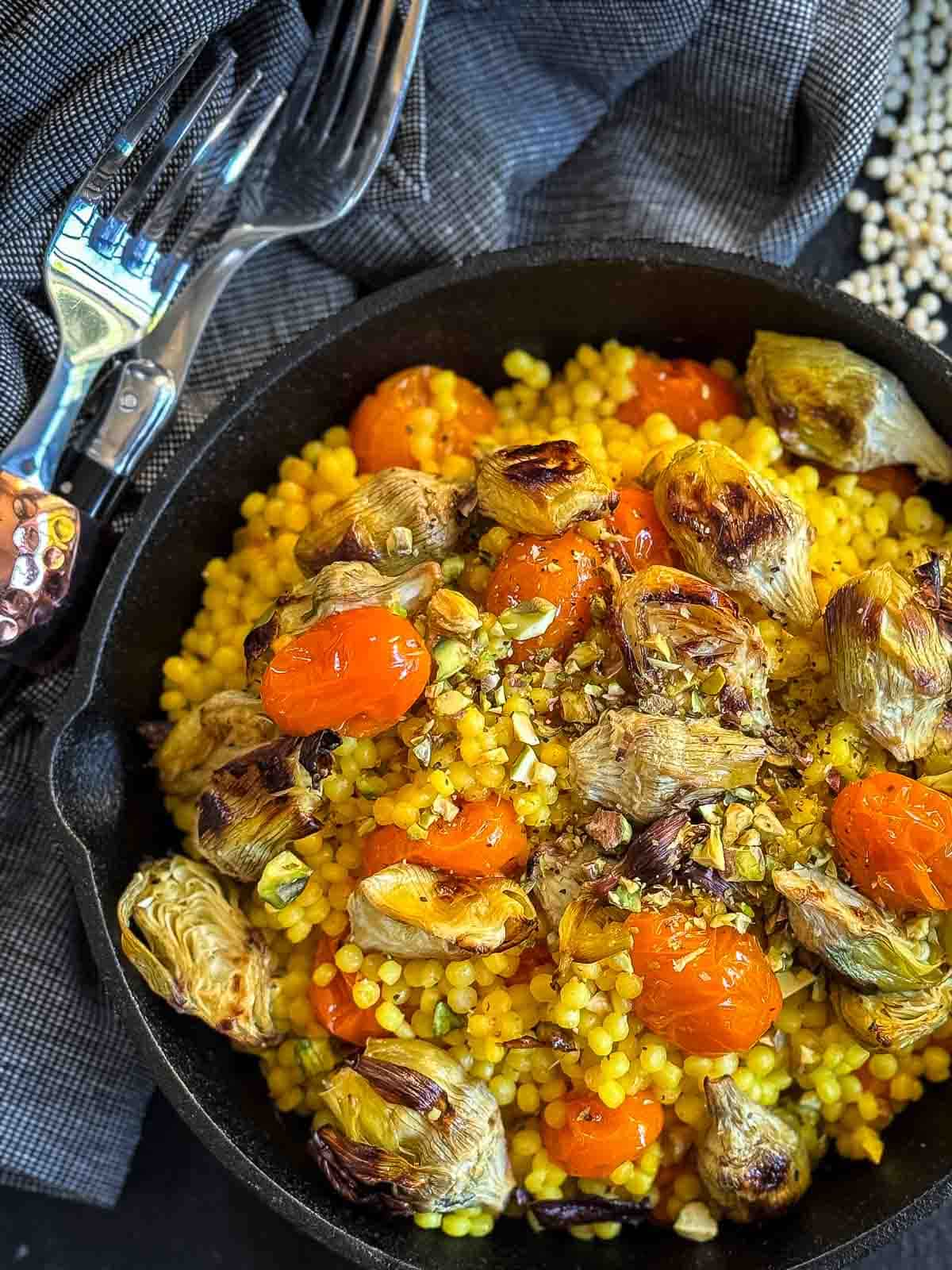
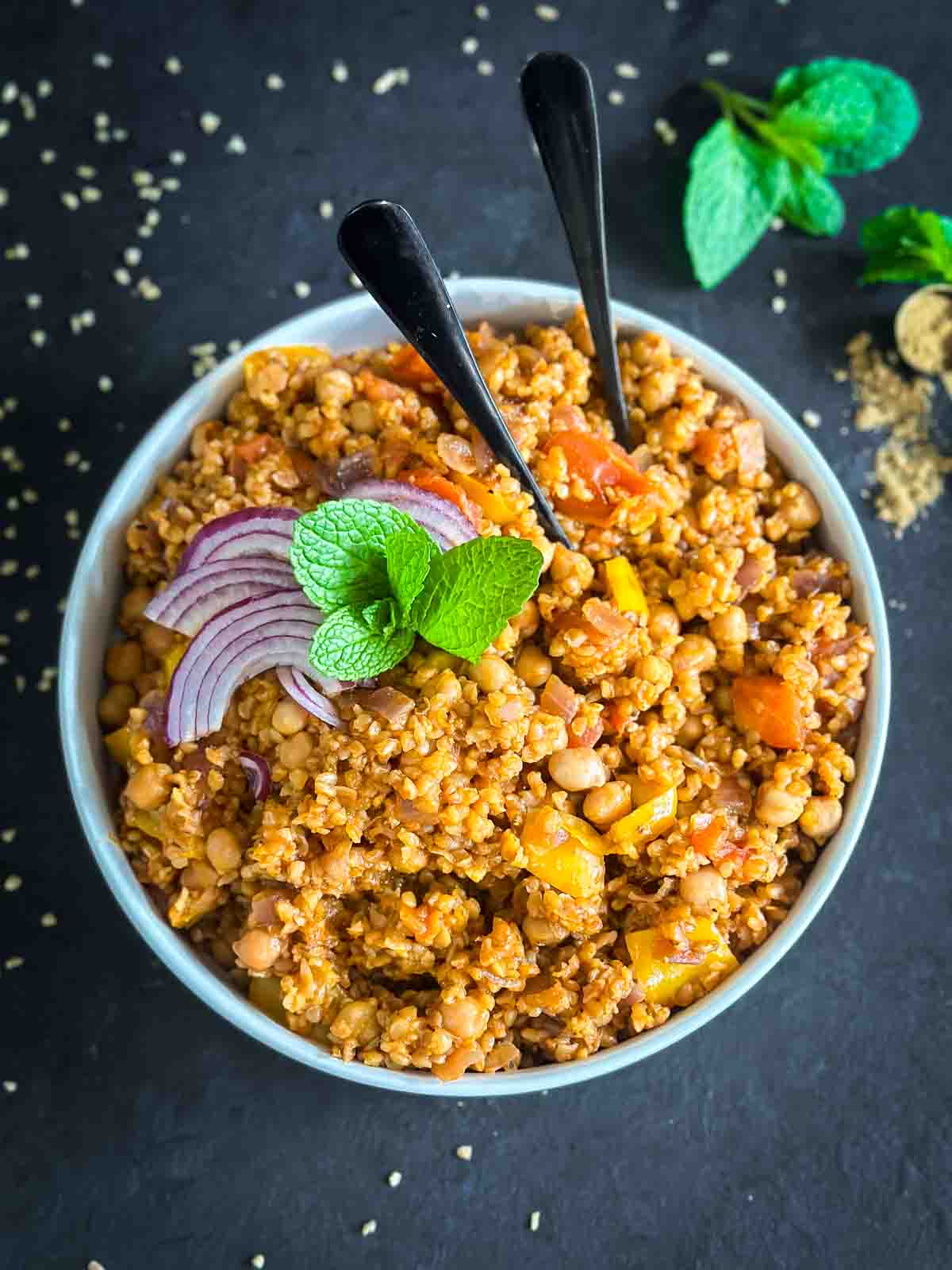

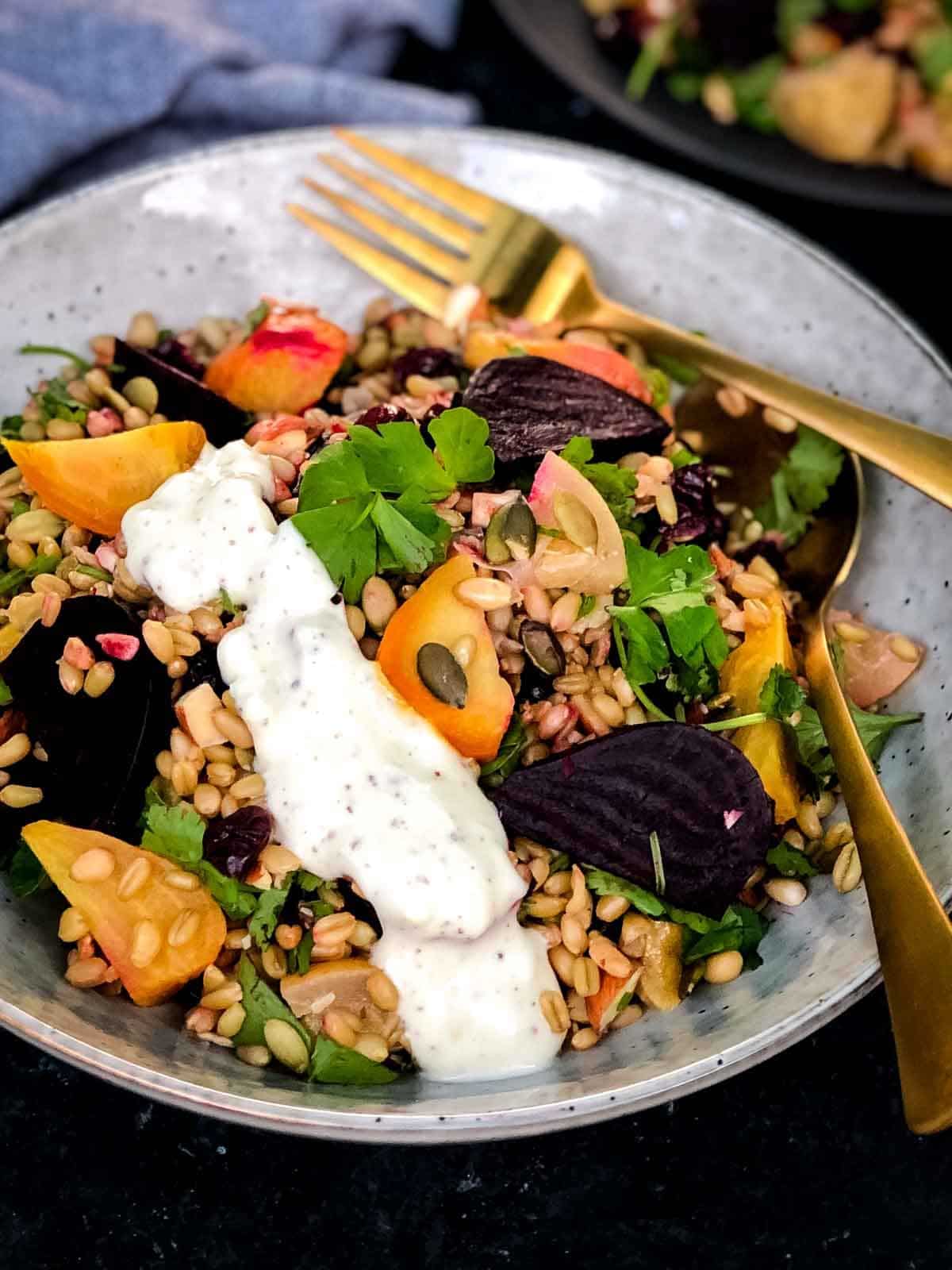

FEED YOUR FOMO! For more sides and salads, subscribe to our newsletter or follow us on Facebook, Instagram, Pinterest and YouTube to get our latest updates.
Ezme Salad – Bold Turkish Tomato Salad with Aleppo Pepper
Ingredients
Salad
Salad Dressing
- 1 tbsp Salçasi, Middle Eastern tomato paste
- 1 garlic clove, minced
- 1 tbsp pomegranate molasses
- ½ lemon, juiced
- 1 tsp sumac
- 1 tbsp Aleppo pepper flakes
- salt, to taste
- 2 tbsp olive oil
Click on the toggle below for conversion to US Cooking Units.
Instructions
Salad
- In a food processor, add all salad ingredients except the tomatoes.
- Pulse the ingredients. You want it chopped, not pureed.
- On a large chopping board, chop the tomatoes well.
- Slowly add ingredients from the food processor and chop together.
- You’re after a chunky dip-like consistency.
Salad Dressing
- In a mixing bowl, add all ingredients except olive oil.
- Mix ingredients and keep stirring as you drizzle the olive oil in slowly. This will help to emulsify the dressing properly.
Assembly
- Add the chopped salad ingredients into the dressing mixing bowl.
- Mix until well combined.
- Serve
Notes
- No salçası? Use a good quality double-concentrated tomato paste as a substitute. Add a tiny pinch of Aleppo pepper or dried chilli to the paste to approximate some of the depth. The flavour will be simpler but still good.
- No Aleppo pepper? Standard chilli flakes will work at a pinch, but use half the quantity as they are significantly hotter and less fruity. Smoked paprika mixed with a small amount of chilli flakes is a closer approximation to the Aleppo pepper flavour profile.
- Adjust the heat: One tablespoon of Aleppo pepper gives a medium warmth. Reduce to half a tbsp for a milder version. Increase for more heat. Worth noting that acılı ezme literally means “spicy ezme” in Turkish, so don’t be afraid to go bold.
- No food processor? Fine-chop all the vegetables by hand on a large chopping board. It takes longer, but the result is similar. The goal is a finely chopped, almost crushed consistency, not a puree.
- Serve it as a dip: Ezme works beautifully as a dip with warm pita or flatbread. It is a staple of Turkish mezze spreads alongside hummus and baba ghanoush.
- Add walnuts: Some regional versions of ezme include finely chopped toasted walnuts for extra texture and nuttiness. Stir through just before serving.
- Serve as a sauce: Spoon it over grilled lamb, chicken, or beef as a fresh, punchy sauce. It pairs especially well with our Sides for Lamb collection.
- Pulse, don’t puree: The food processor is a tool here, not a blender. You want the vegetables finely chopped with some texture remaining. Pulse in short bursts and check frequently. Over-processing turns everything into a wet mush that will not hold the dressing properly.
- Chop the tomatoes by hand, separately: This is not a step to skip. Tomatoes processed in a food processor release too much liquid and lose all their texture. Chopping them on a board and then combining with the other vegetables gives you the chunky, defined pieces that are characteristic of a great ezme salatası.
- Drain excess liquid if needed: After chopping and mixing, if the vegetables have released a lot of moisture, tip everything into a fine mesh sieve and let it drain for a minute or two before adding the dressing. This keeps the ezme from becoming watery.
- Emulsify the dressing properly: Drizzle the olive oil in slowly while stirring constantly. A properly emulsified dressing coats every piece of vegetable evenly and gives the ezme its glossy, cohesive appearance.
- Let it rest if you can: Even 15–20 minutes of resting time allows the flavours to meld and deepen significantly. The vegetables continue to release their juices into the dressing and the whole dish becomes more cohesive. If you are making it ahead, cover and refrigerate and give it a stir before serving.
- Use the best tomatoes available: This is a raw tomato dish so the flavour of the tomatoes is front and centre. Ripe, flavourful tomatoes make this recipe sing. Out-of-season, watery supermarket tomatoes will make it flat. If tomatoes are not at their best, use good quality canned whole tomatoes, drained and hand-chopped.
Nutrition
*Disclaimer: Nutritional information provided is an estimate only and generated by an online calculator.
Hey there! We’re The Sidesmith!

Phenie
I tell the stories behind our recipes and capture the bits that make us human.

Sammy
I create delicious sides, often Asian-inspired. Easy for everyday meals or great for entertaining.

Amy
Love turning everyday salads and sides into fancy recipes jammed packed with flavour!


GRAB YOUR SUMMERTIME ECOOKBOOK NOW!
New Summertime Recipes
Be summer ready and get our new Summertime Sides & Salads eCookbook! These are all exclusive, never seen before recipes. They are all tried and tested with everyday easy to find ingredients and yet are restaurant quality in style. Get your copy today!