
Roasted Chickpea and Carrot Baharat Salad
Roasted chickpeas and carrots spiced with Baharat, tossed with pomegranate and a molasses dressing. A bold Middle Eastern carrot salad recipe.
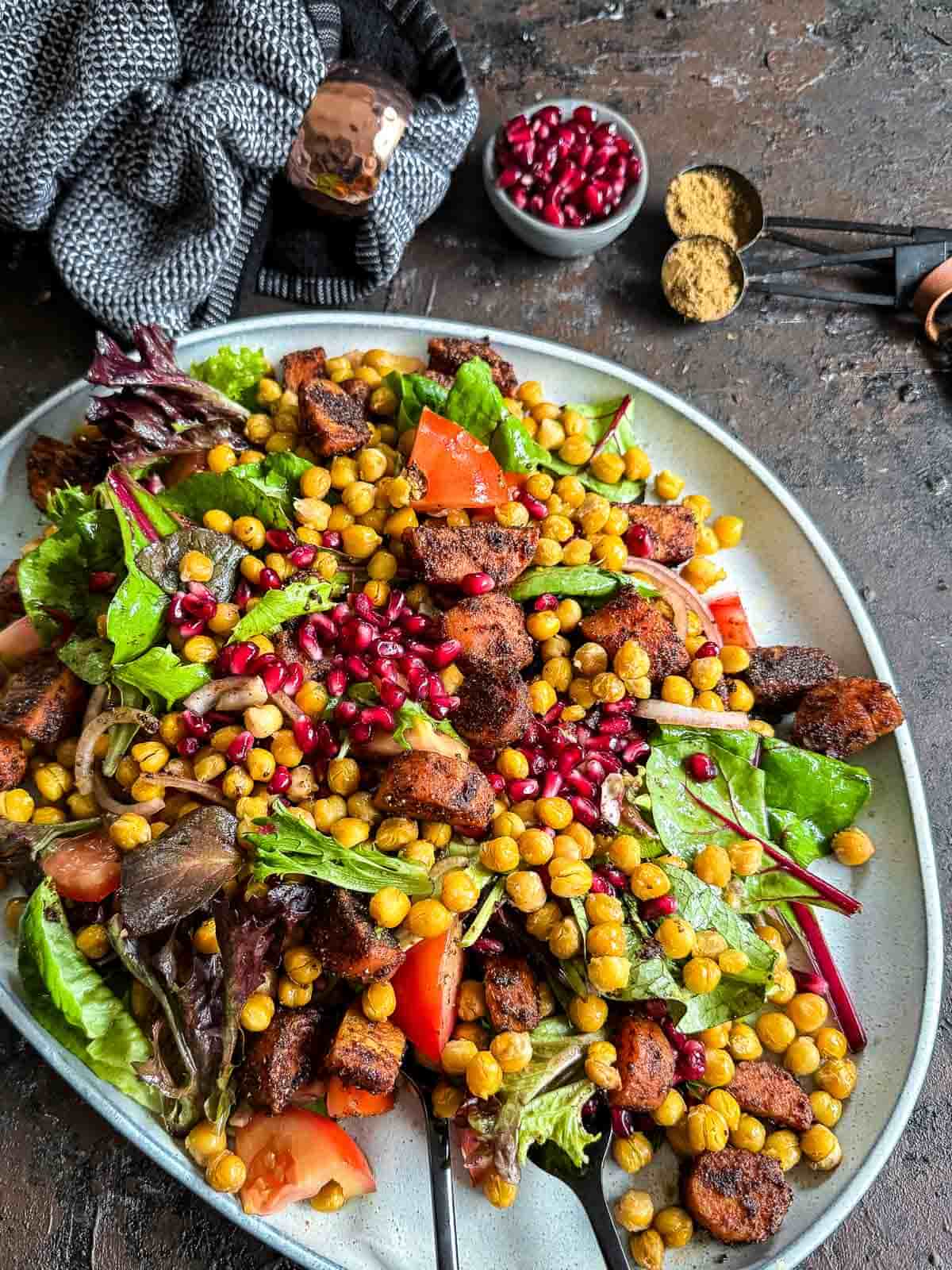
The Middle Eastern Salad That Will Steal the Show at Your Next Dinner
This roasted chickpea and carrot salad is one of those dishes that stops people mid-conversation at the table.
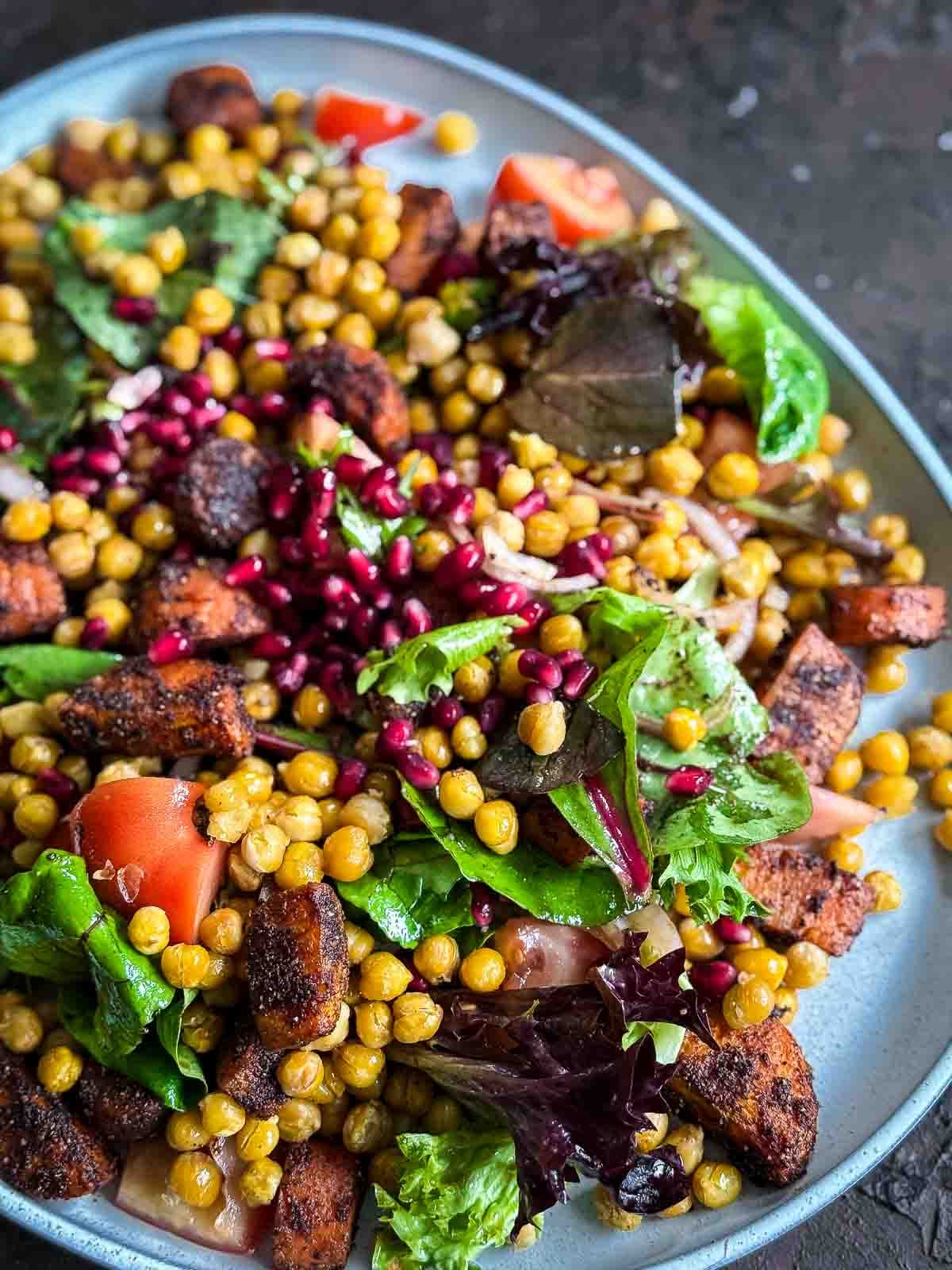
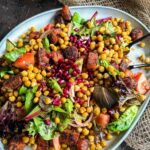
Warm, spiced carrots and crispy roasted chickpeas sit on a bed of fresh mixed leaves with juicy tomato, thinly sliced shallot, and jewel-like pomegranate seeds, all brought together with a deeply flavoured pomegranate molasses dressing.
It is bold, it is beautiful, and it tastes every bit as good as it looks. This is a carrot salad recipe with serious personality.
What sets this salad apart is the Baharat spice mix; a fragrant Middle Eastern blend of spices including cumin, cinnamon, cardamom, and cloves that coats the carrots before roasting and transforms them into something completely extraordinary.
The chickpeas roast alongside until irresistibly crispy, adding crunch and protein to every bite.
The pomegranate molasses dressing ties the whole dish together with a sweet, tart, deeply savoury richness that is unlike anything in a standard salad. If you love bold flavours and salads that genuinely impress, this one is for you.
For more inspiration on salads that go the distance, have a look at our Baby Beets with Labneh and Bulgur Salad with Mushrooms.
Yes, there is some roasting involved but do not let that put you off. The oven does all the hard work while you get on with the rest of the prep, and the payoff is a salad that looks and tastes restaurant-worthy with very little effort from you.
Baharat: The Spice Blend Behind All the Magic
Baharat is the heart and soul of this salad, and it is worth understanding what makes it so special.
The word Baharat simply means “spices” in Arabic, and the blend has been a cornerstone of Middle Eastern cooking for centuries — used across Lebanon, Syria, Turkey, Iraq, and beyond.
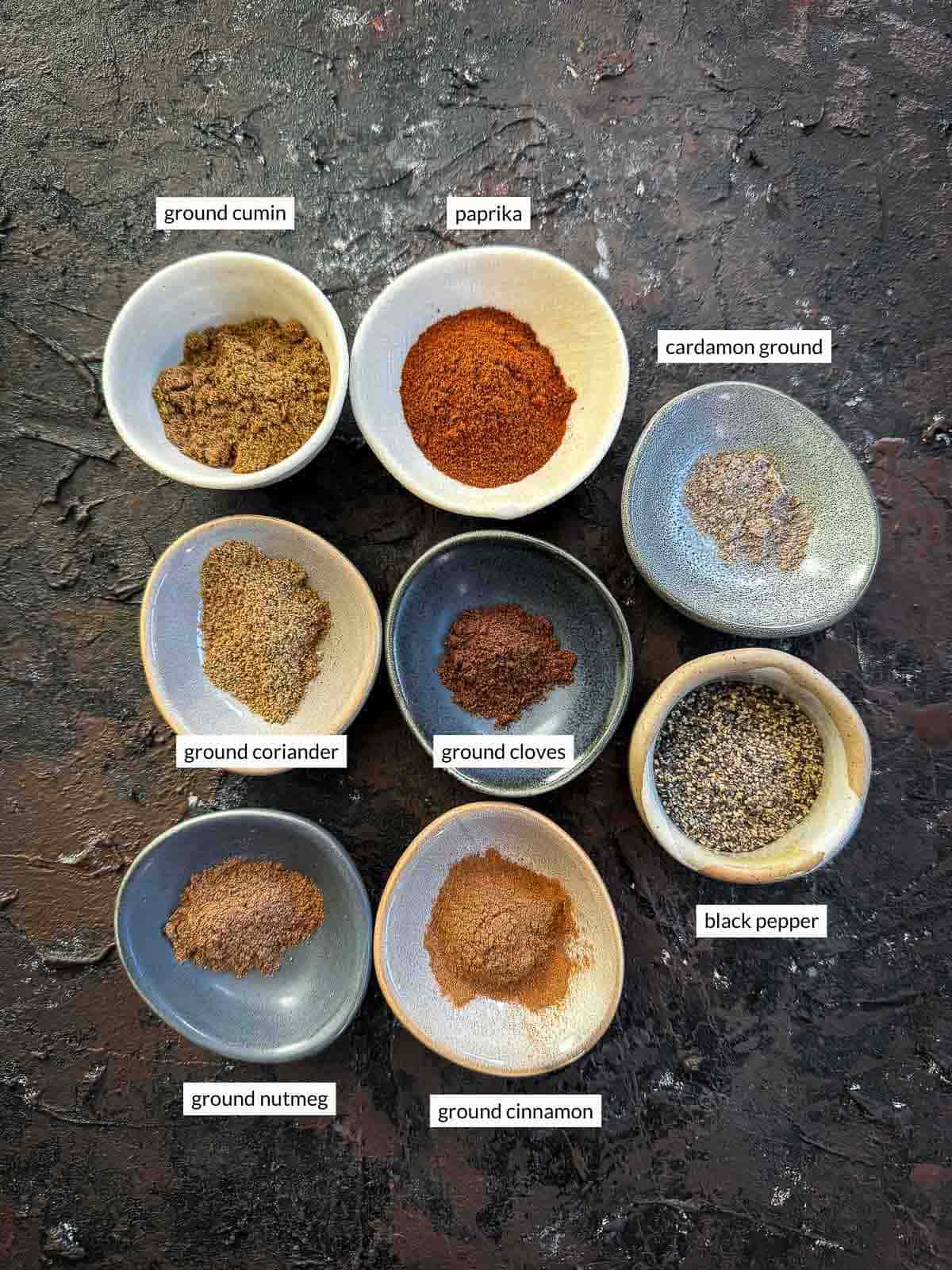
While the exact combination varies by region and by household, the version in this recipe brings together eight spices: paprika, cumin, black pepper, coriander, cinnamon, nutmeg, cardamom, and cloves.
Together they create a flavour profile that is warm and earthy with a gentle sweetness and a subtle heat that builds as you eat.
It is deeply aromatic without being overwhelming, and it does something remarkable to roasted vegetables — coating the carrots in this spice mix before they go into the oven creates a caramelised, spiced crust that makes them taste completely transformed.
You can buy pre-made Baharat spice blends at Middle Eastern grocery stores and some specialty delis, but making it yourself from scratch takes two minutes, and the result is noticeably fresher and more vibrant.
If you love cooking with bold spice blends, our Risoni with Spiced Roasted Butternut Pumpkin is another great way to bring Middle Eastern flavours to your table.
Roasted chickpeas and Baharat-spiced carrots on mixed leaves with tomato, shallot, and pomegranate seeds. Dressed in a pomegranate molasses and apple cider vinegar dressing. Prep 20 mins, cook 30 mins. Vegan, gluten free, and dairy free.
Recipe Overview
Flavour/Texture: Warm, bold, and deeply satisfying. The Baharat-spiced carrots are earthy and caramelised with a fragrant spiced crust. The chickpeas are crispy and nutty.
The pomegranate seeds bring bursts of sweet tartness, and the molasses dressing ties everything together with a rich, complex sweetness.
The mixed leaves keep it fresh and light underneath all that warmth. Every forkful hits differently.
Ease: This salad has a few steps, but none of them is complicated. You roast the chickpeas and carrots at the same time, which means the oven is doing the heavy lifting while you prep everything else.
If you can peel a carrot, drain a can, and whisk a dressing, you can make this. It is a genuinely achievable recipe for any cook and the result looks far more impressive than the effort involved.
Time: Twenty minutes of prep, thirty minutes of roasting, and you are done.
Use the roasting time to slice your shallot, chop your tomato, deseed the pomegranate, and whisk together the dressing. By the time the oven timer goes off, everything else is ready.
Ingredients for Roasted Chickpea and Carrot Baharat Salad
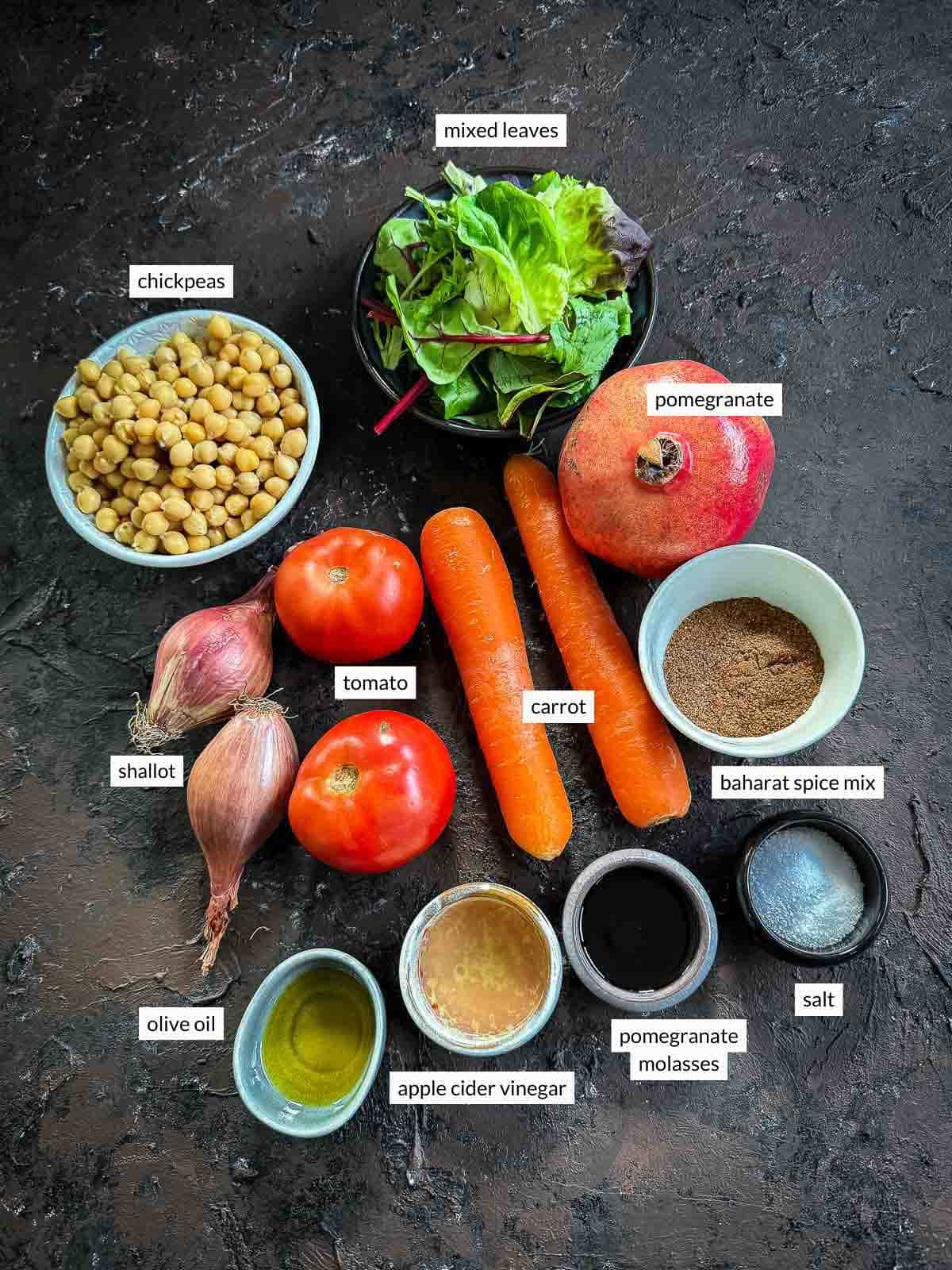
Chickpeas: Canned chickpeas are perfect here — convenient, consistent, and just as good as dried for roasting.
The key to crispy roasted chickpeas is getting them completely dry before they go into the oven.
Drain and rinse them well, then rub them in a tea towel to remove as much moisture as possible and loosen some of the skins. Any residual moisture will steam rather than roast them, and you will lose the crunch.
Look for cans with no added salt so you can control the seasoning yourself as we did with this Chickpea Salad with Feta.
Carrots: Fresh carrots are essential. Pre-cut or bagged baby carrots have too much surface moisture and won’t roast as well.
Look for firm, smooth carrots with no soft spots. Cut them into pieces roughly the same size as the chickpeas so everything roasts evenly, and every bite has a balanced mix of both.
Olive Oil: Split between the chickpeas and the carrots. Use a good quality extra virgin olive oil — it handles the 200°C roasting temperature well and adds flavour. Cheap blended oils can taste flat once roasted.
Baharat Spice Mix: This recipe includes a full homemade Baharat blend: paprika, cumin, black pepper, ground coriander, cinnamon, nutmeg, cardamom, and cloves.
Making it yourself takes two minutes and produces a noticeably fresher, more vibrant result than store-bought. Measure everything out before you start. It makes the process faster. Store any leftover spice mix in a sealed jar for up to three months.
Shallot: Shallots are milder and sweeter than brown onion, which makes them perfect for eating raw in a salad. Look for firm, tight-skinned shallots with no soft spots.
Slice as thinly as possible. A mandoline is ideal but a sharp knife works fine. If you only have brown onion, soak the slices in cold water for 10 minutes to take the edge off before adding to the salad.
Tomato: One medium ripe tomato, roughly cut to a similar size as the carrots. Use whatever is ripe and in season, as a good tomato makes a real difference here.
Pomegranate: Fresh pomegranate seeds add bursts of sweet-tart juiciness and stunning colour. To deseed easily, cut the pomegranate in half, hold it cut-side down over a bowl, and whack the back firmly with a wooden spoon. The seeds fall out quickly.
You can also buy ready-seeded pomegranate at most major supermarkets, which saves the mess entirely.
Mixed Leaves: Use whatever mixed leaves you prefer. Arugula (rocket) adds a peppery bite, baby spinach is milder, and a mixed blend gives variety. Look for leaves that are crisp and vibrant with no wilting or browning at the edges.
The leaves act as the fresh, cool base that balances the warm roasted elements of this salad.
Apple Cider Vinegar: Adds brightness and acidity to the dressing. Use a good quality unfiltered apple cider vinegar if you have it.
Pomegranate Molasses: This is the flavour backbone of the dressing and worth seeking out. It is a thick, dark syrup made from reduced pomegranate juice that is intensely tart, sweet, and complex.
It keeps for a long time in the pantry. If you love it as much as we do, check out our dedicated Roasted Beetroot Salad with Halloumi and Pomegranate Glaze for more ways to use it.
Olive Oil: for Dressing: Emulsify it into the dressing by drizzling slowly while whisking. This creates a cohesive, glossy dressing rather than a separated oil-and-vinegar mixture.
Salt and Pepper: Season the salad to taste at assembly. The Baharat spice mix already has black pepper so taste before adding more — you may find you need very little.
Two cans of chickpeas and two carrots roasted in olive oil and Baharat spice. Assembled on mixed leaves with sliced shallot, tomato, and fresh pomegranate seeds. Dressed in a whisked pomegranate molasses, apple cider vinegar, and olive oil dressing. Season with salt and pepper.
Variations And Substitutions
No pomegranate molasses? Substitute with a mix of 2 teaspoons of balsamic vinegar and 1 teaspoon of honey. It won’t be identical but captures a similar sweet-tart quality. Tamarind paste also works in a pinch.
Fresh pomegranate seeds can be swapped for dried barberries or dried sour cherries if pomegranate is out of season, as both add tartness and visual interest.
Add cheese: Crumbled feta scattered over the top adds a salty, creamy contrast that works beautifully with the Baharat spices and pomegranate. It makes the salad more substantial too.
Add grains: Stir through cooked couscous, freekeh, or bulgur wheat to turn this into a more filling grain salad. Our Bulgur Pilaf is a great example of how well grains work in this kind of Middle Eastern-inspired dish.
Store-bought Baharat: If you don’t want to make the spice mix from scratch, pre-made Baharat is available at Middle Eastern grocery stores and some specialty delis. Start with 1.5 tbsp as pre-made blends vary in strength.
Different vegetables: Roasted pumpkin, roasted cauliflower, or roasted beetroot all work beautifully with Baharat in place of or alongside the carrots.
Add nuts: Toasted pine nuts or slivered almonds scattered over the top add extra crunch and a classic Middle Eastern touch.
How To Make Roasted Chickpea and Carrot Baharat Salad
How To Roast Chickpeas
Drain chickpeas and wash well.
Place in a tea towel and gently rub to help remove the skin.
Ensure chickpeas are dry before tossing them through 1 ½ tbsp of olive oil.
Place on a sheet pan lined with baking paper.
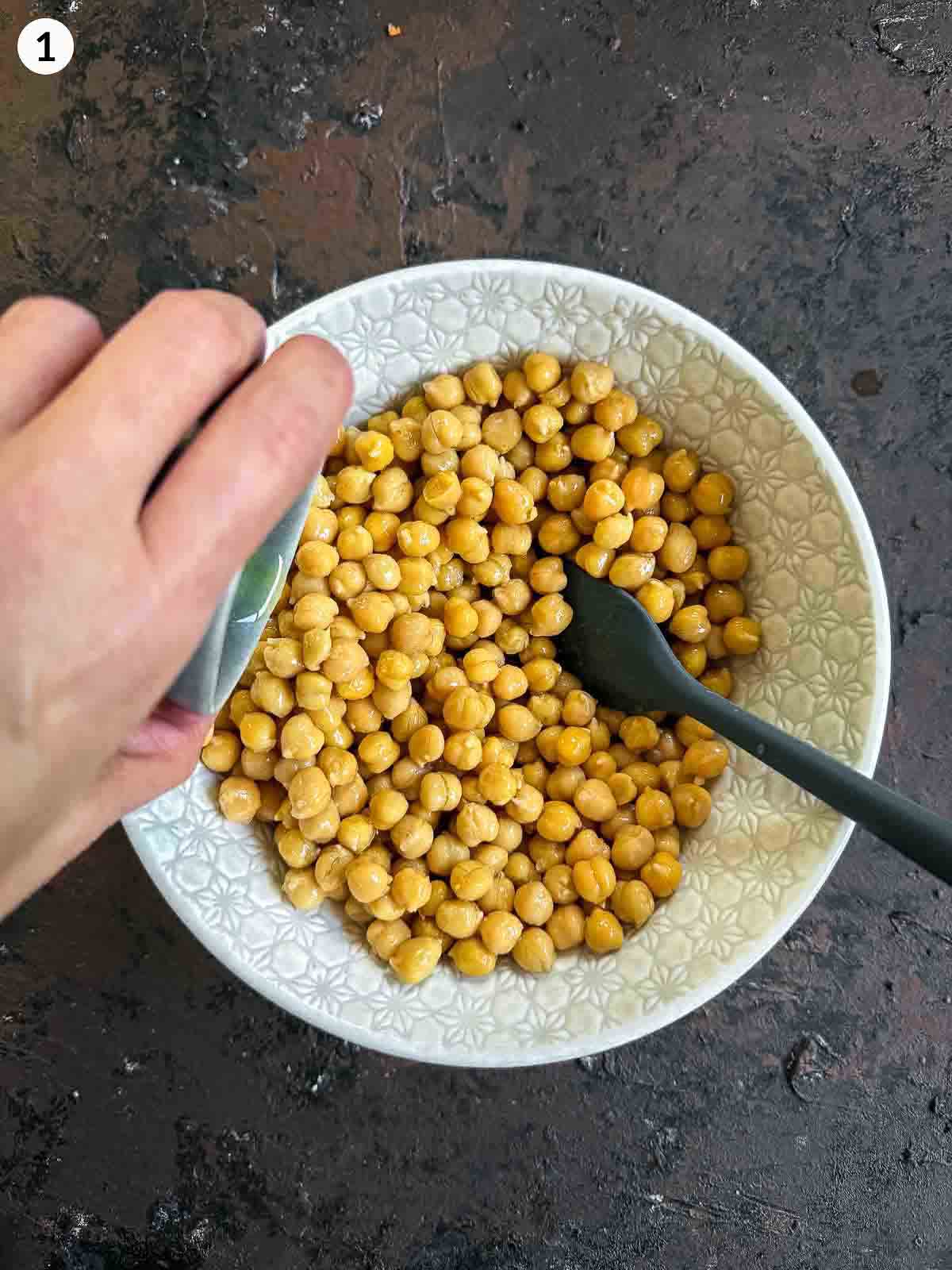
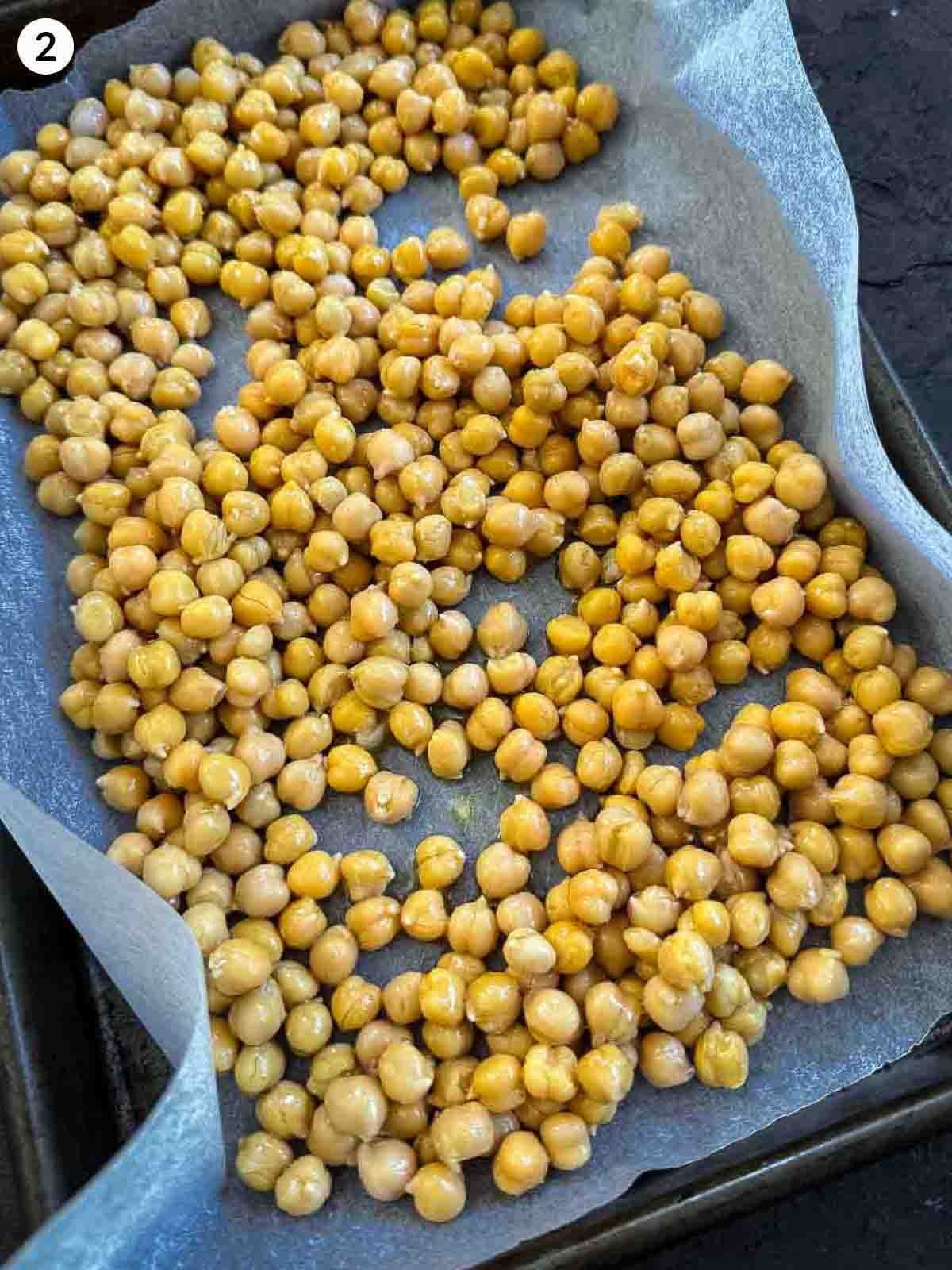
Put in the oven at 200°C (400°F) for 30 minutes. Set aside to cool when completed.
How To Roast Carrots
If you’re making your own Baharat spice, add all ingredients and mix.
Peel carrots and cut into small pieces.
Add 1 ½ tbsp olive oil, mix well.
Add 2 tbsp Baharat spice mix and mix well.
Place on a sheet pan lined with baking paper.
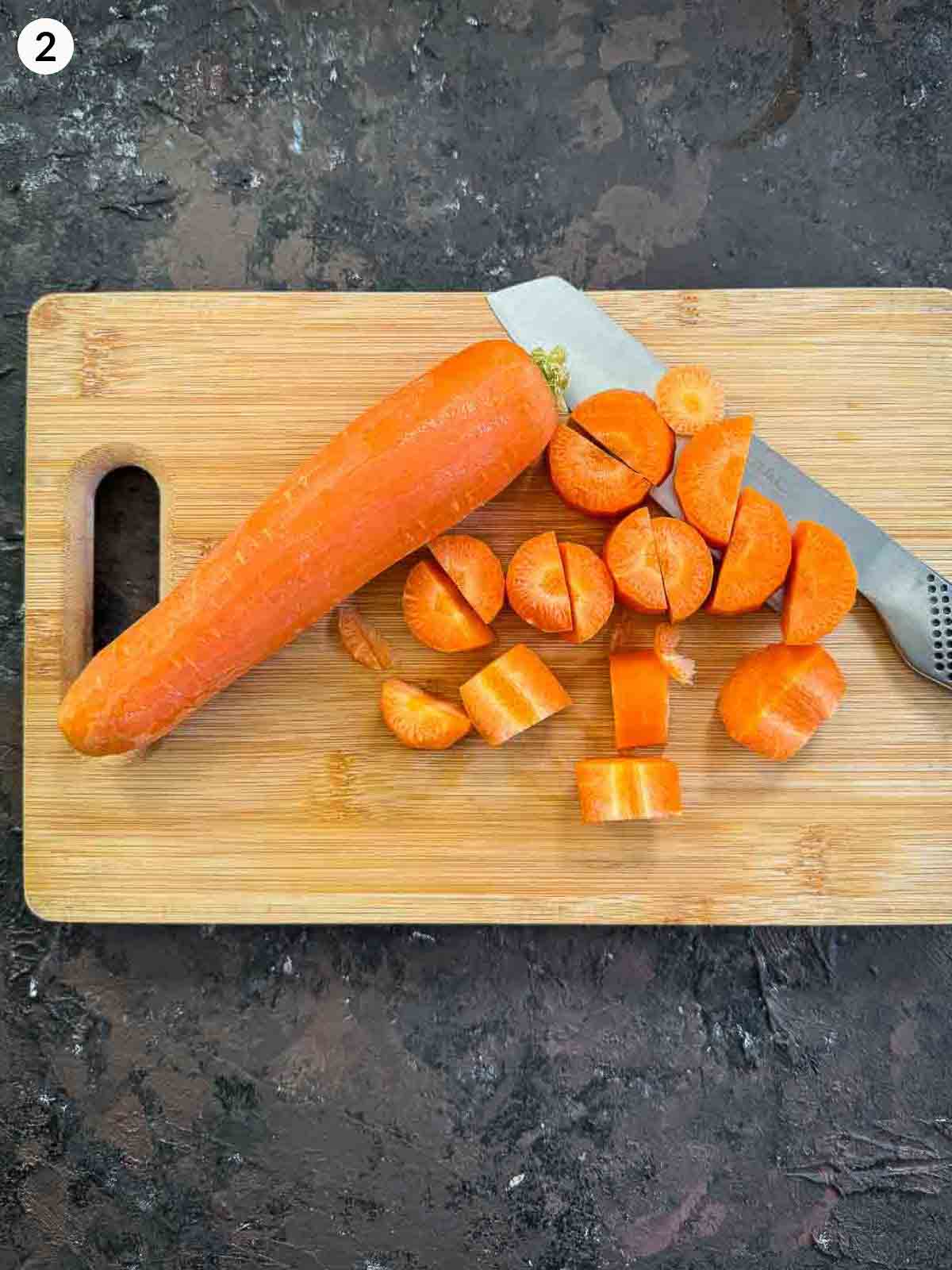
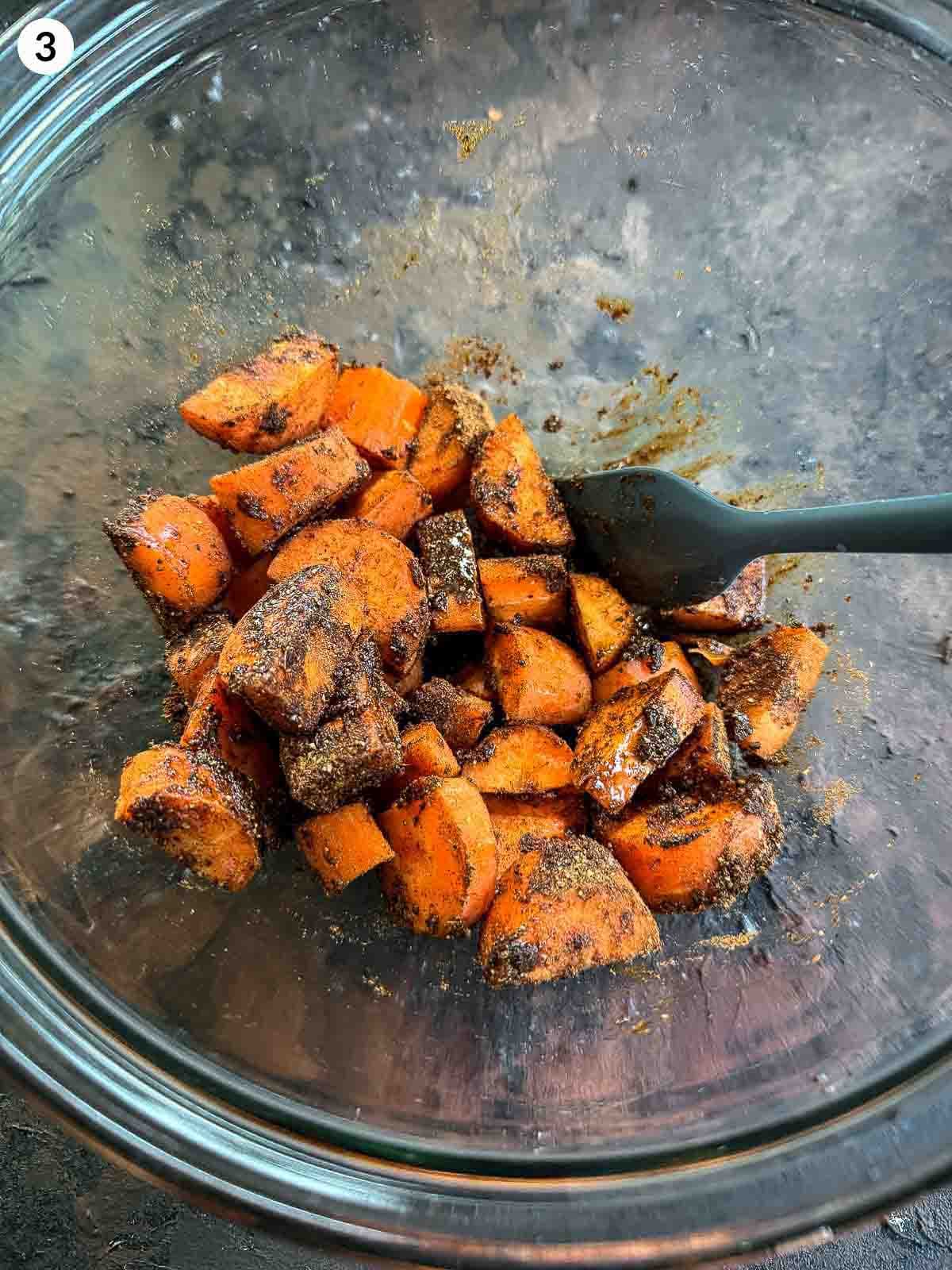
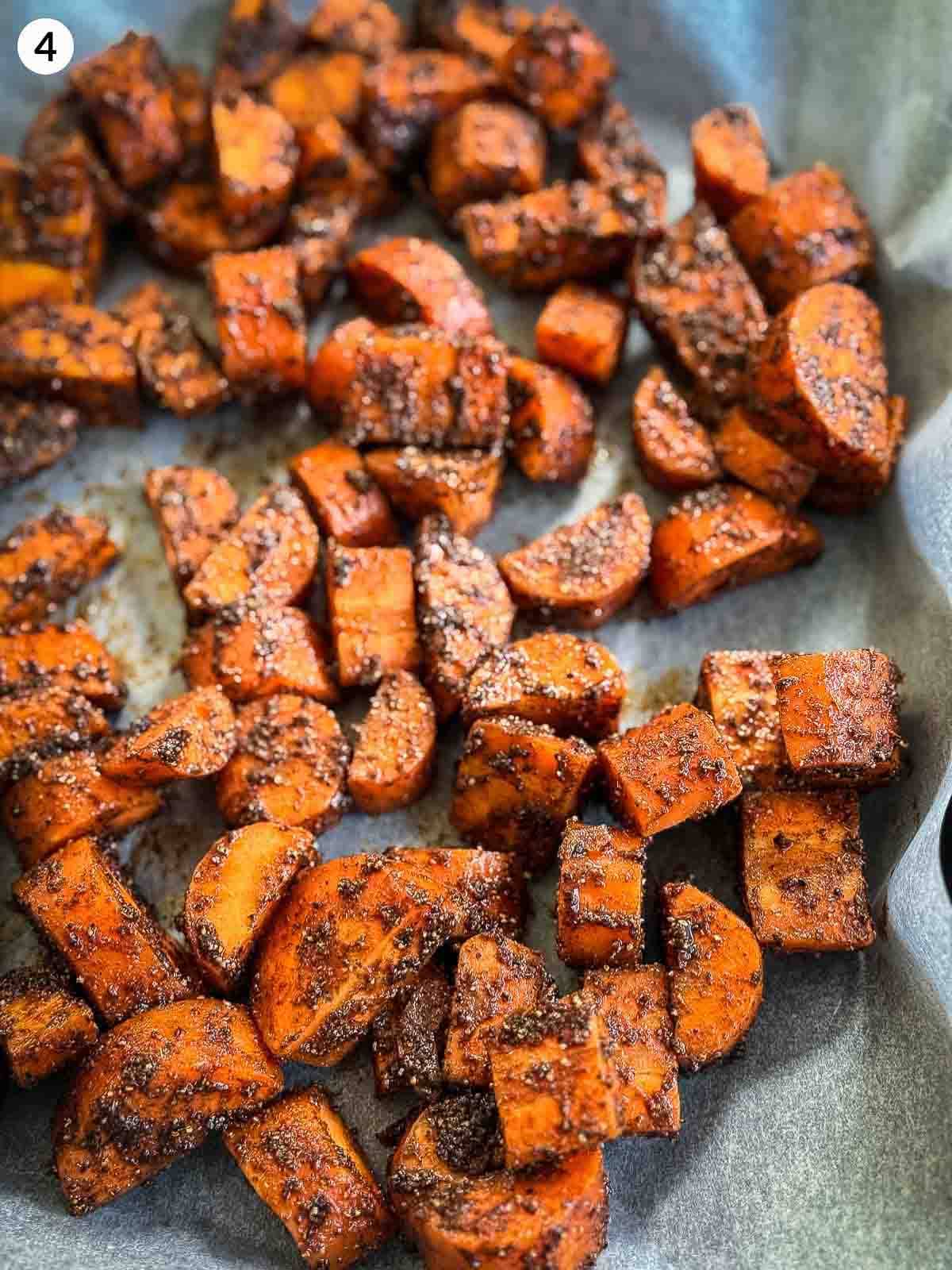
Put in the oven at 200°C (400°F) for 30 minutes. Set aside to cool when completed.
How To Prepare the Rest of the Recipe
Thinly slice ½ a shallot.
Roughly cut tomato around the same size as the carrots.
De-seed ½ pomegranate.
How To Make the Pomegranate Molasses Dressing
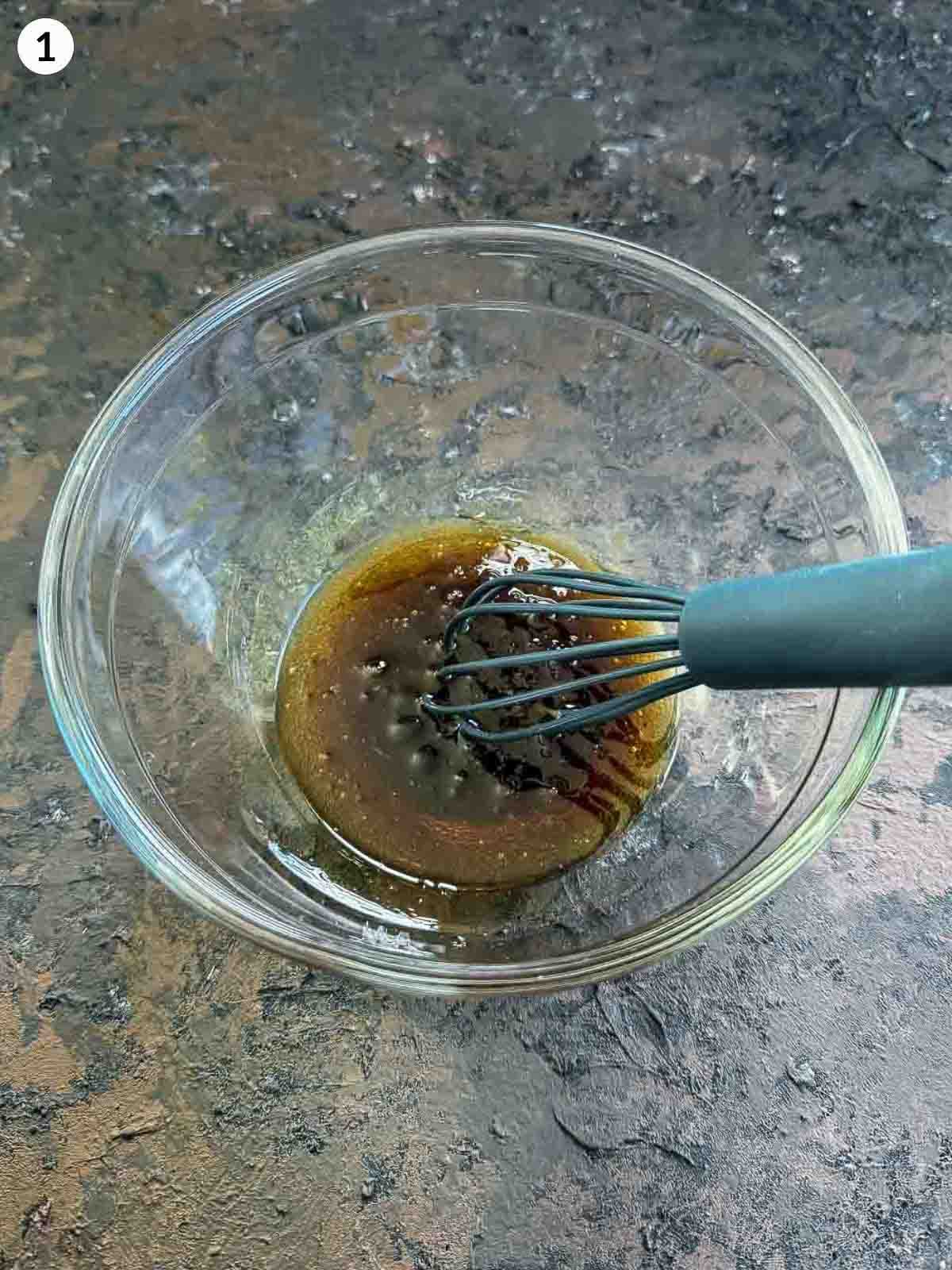
In a small mixing bowl, add apple cider vinegar and pomegranate molasses.
Using a whisk, mix well. Drizzle olive oil while mixing to emulsify the dressing.
Set aside.
How To Assemble Salad
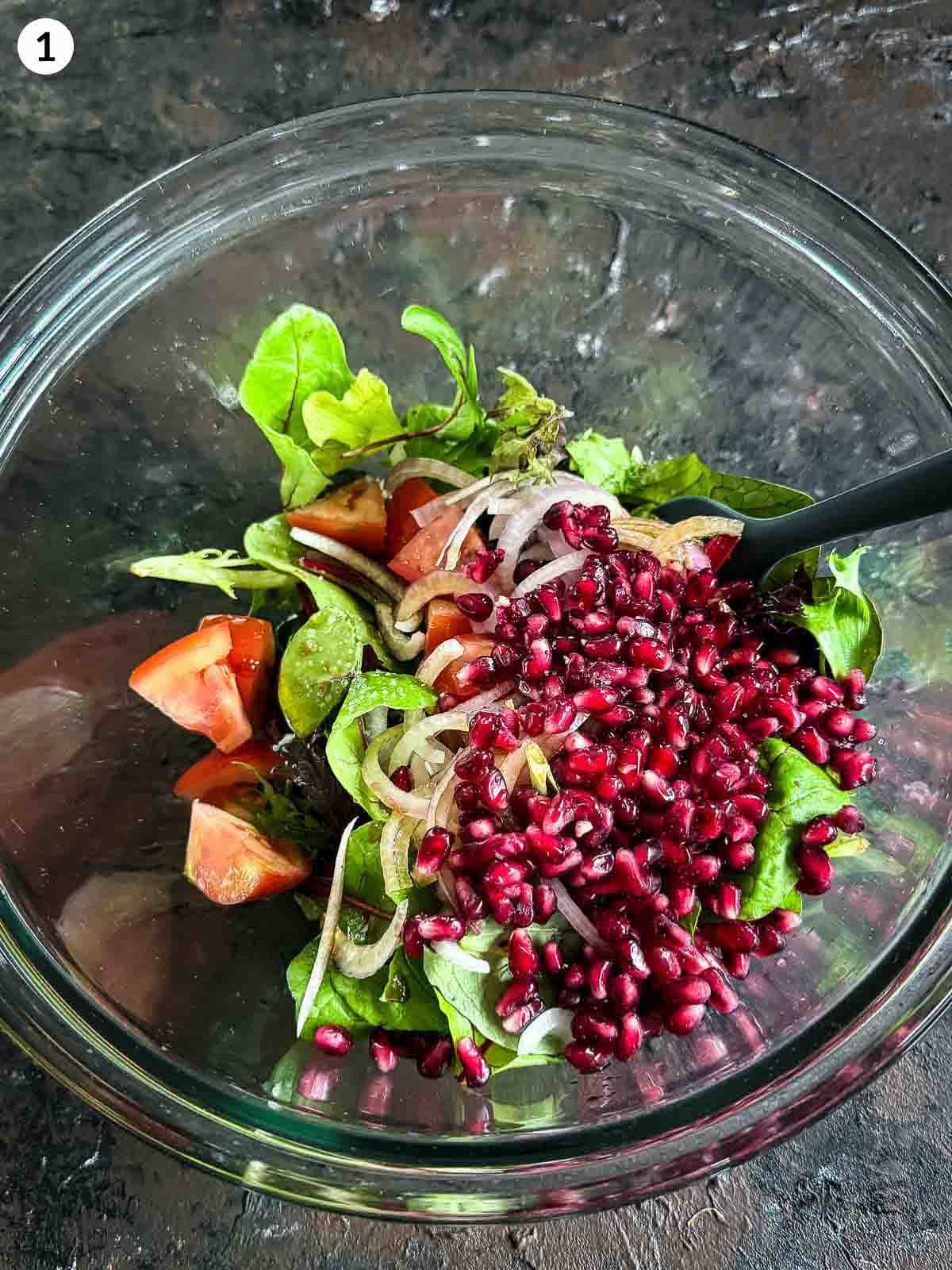
In a large mixing bowl, add mixed leaves, shallot, tomato, pomegranate seeds, salt, pepper and salad dressing.
Mix thoroughly.
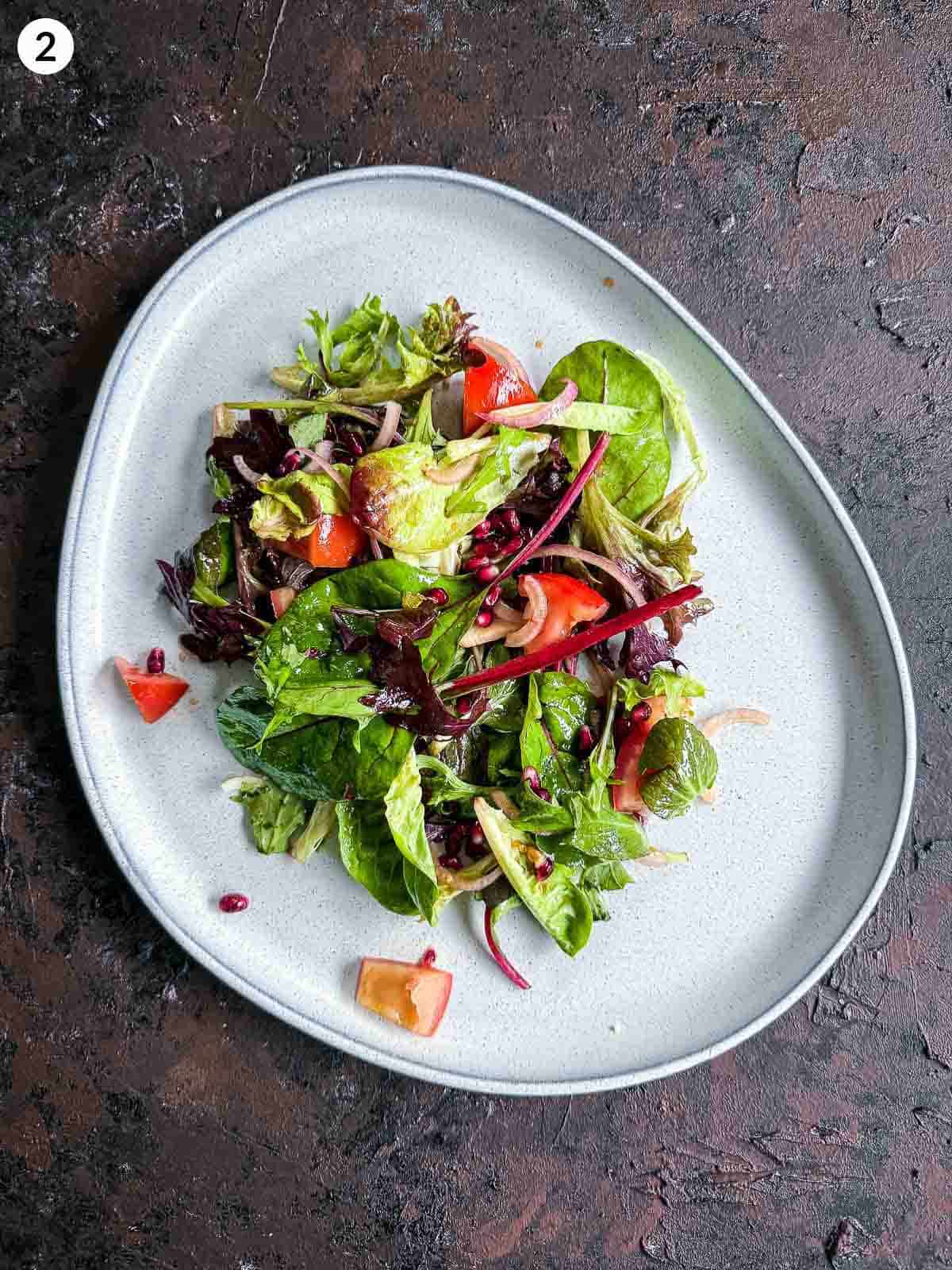
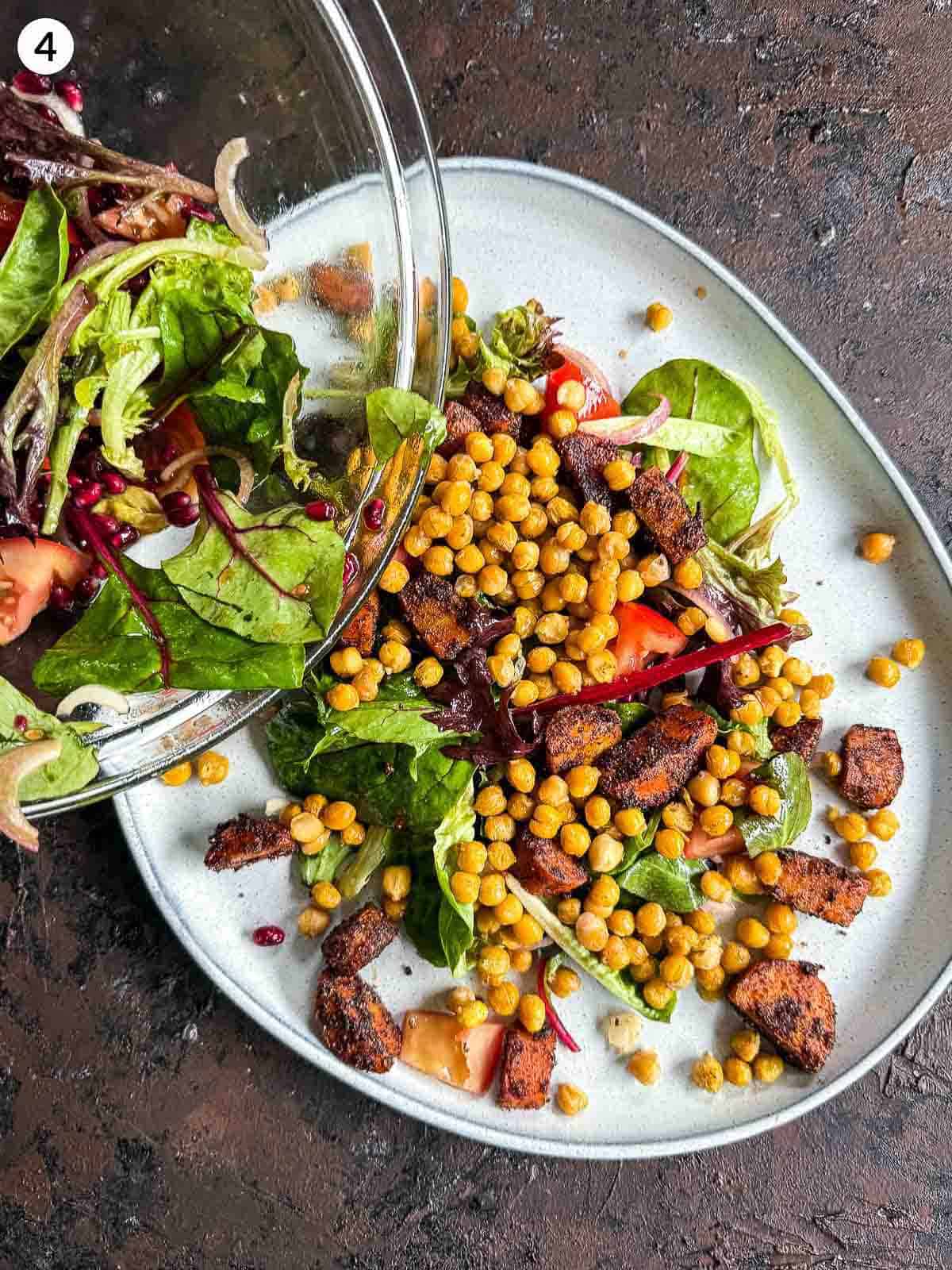
Place half the salad on a platter. Add half the chickpeas and carrots.
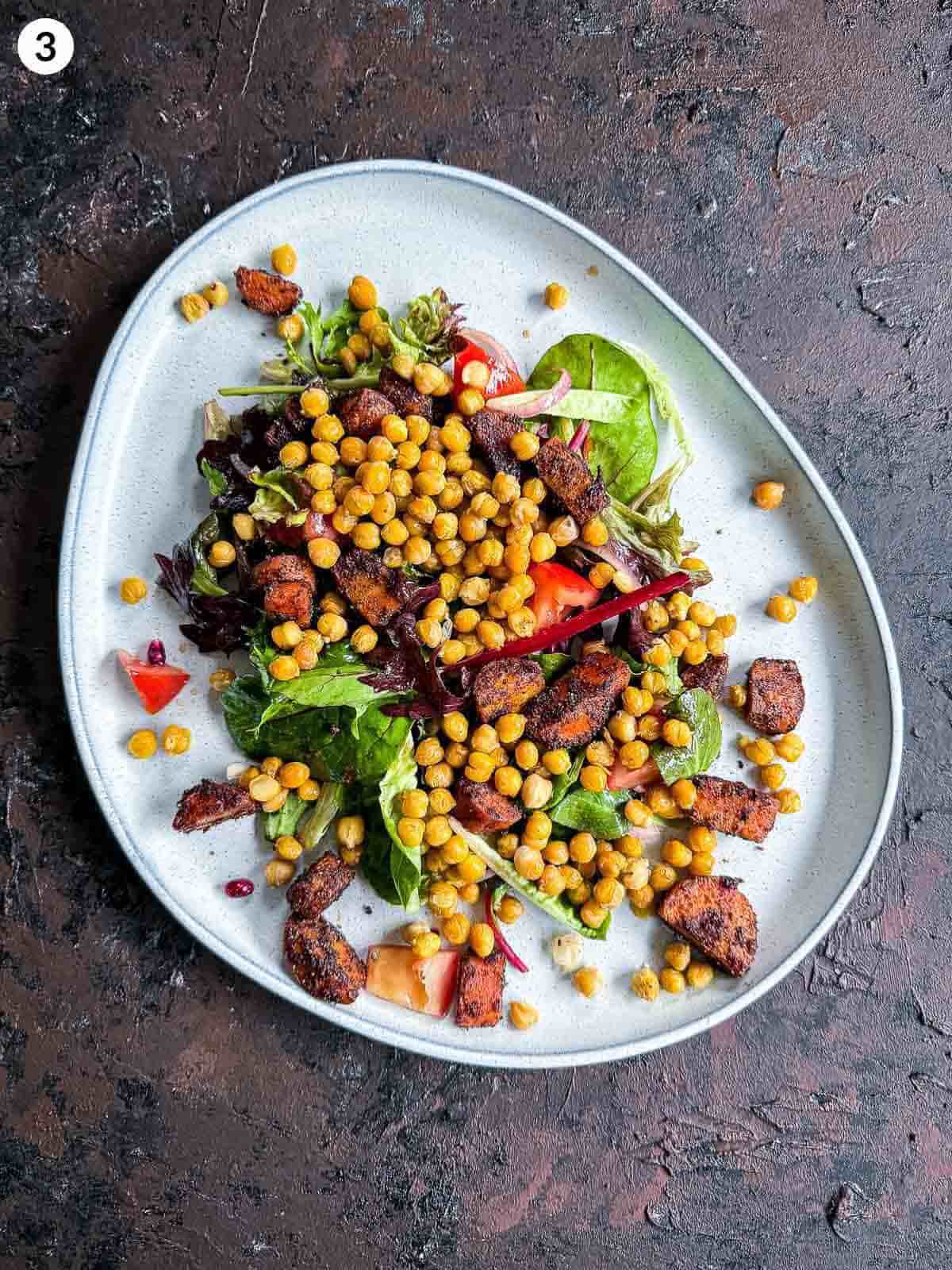
Place the rest of the salad mix on top. Finish off with the rest of the chickpeas and carrots.
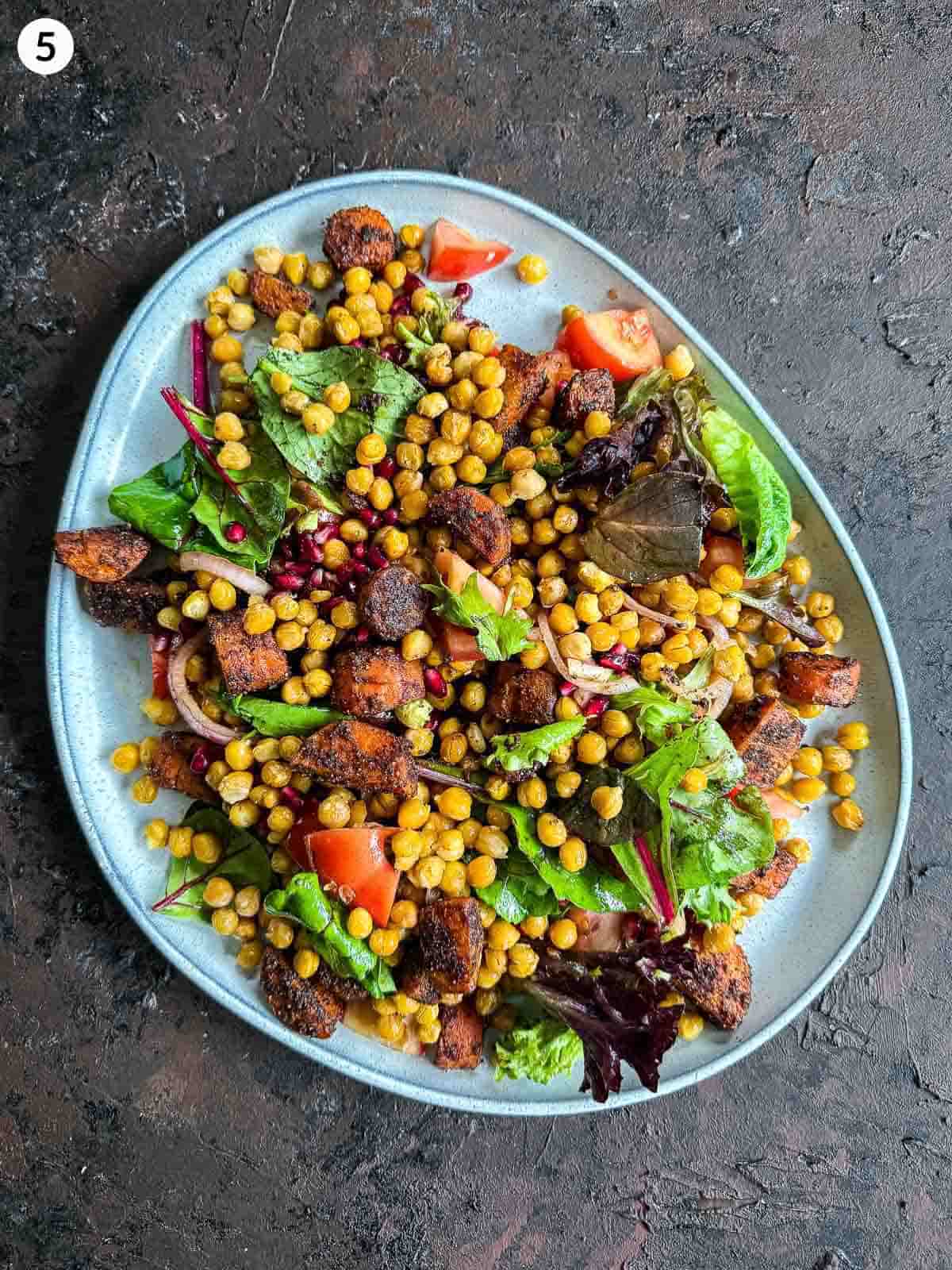
Serve.
Dry chickpeas and roast in olive oil at 200°C for 30 minutes on a separate tray to Baharat-spiced carrots. Cool both. Whisk dressing and toss through salad ingredients. Layer on a platter with chickpeas and carrots. Serve.
How to Make This Salad Perfectly [Expert Tips]
Dry the chickpeas thoroughly as this is non-negotiable for crunch: After draining and rinsing, spread them on a clean tea towel and rub gently.
The rubbing also loosens the skins, which you can discard. Any moisture left on the chickpeas will create steam in the oven and prevent crisping.
Use two separate baking trays: The chickpeas and carrots have different textures and release different amounts of moisture as they roast.
Keeping them on separate trays means neither one steams the other, and both come out with better texture.
Cut the carrots consistently: Uniform pieces roast evenly. Uneven cuts mean some pieces will be overdone while others are still firm. Aim for roughly 2cm pieces throughout.
Let everything cool before assembling: Hot roasted chickpeas and carrots will wilt the mixed leaves immediately. Give them 10–15 minutes to cool slightly before assembly — warm is fine, piping hot is not.
Layer, don’t toss. The assembly method in this recipe. Start with half the salad base, then half the roasted elements, then repeat.
This is intentional, as it means every serving gets a mix of leaves, roasted ingredients, and dressing rather than all the chickpeas sinking to the bottom.
Emulsify the dressing properly: Drizzle the olive oil in slowly while whisking constantly. A properly emulsified dressing coats every ingredient evenly rather than pooling at the bottom of the bowl.
Removing the skin off the chickpeas is a game changer for this recipe. It will enable the chickpeas to really crisp up nicely in the oven.
Frequently Asked Questions
Baharat is a Middle Eastern spice blend typically made from paprika, cumin, black pepper, coriander, cinnamon, nutmeg, cardamom, and cloves. The exact combination varies by region and recipe.
In this recipe, you make it from scratch using all eight spices, which takes about two minutes and produces a fresher, more aromatic result than most store-bought versions.
Yes, but you will need to soak them overnight and cook them first, which adds significant time. Canned chickpeas are just as good for roasting and far more convenient. Just make sure they are completely dry before roasting.
Partially. The roasted chickpeas and carrots can be made ahead and stored separately.
The dressing can be made ahead and kept in a jar. Assemble the full salad just before serving as the leaves will wilt if dressed too far in advance.
The key is starting with completely dry chickpeas and roasting at a high enough temperature (200°C/400°F). Once cooled, store them uncovered at room temperature, as putting them in a sealed container traps steam and softens them. They are best eaten the day they are made.
The components work well for meal prep — roast a double batch of chickpeas and carrots and keep them separate from the leaves and dressing. Assemble to order.
The roasted elements keep in the fridge for up to 3 days, though the chickpeas will soften slightly. Reheat them briefly in the oven to bring back some of the crunch.
The bold Middle Eastern spicing makes it a natural partner for grilled lamb, roasted chicken, or baked fish. Browse our Sides for Lamb and Sides for Chicken collections for full pairing ideas.
This roasted chickpea and carrot Baharat salad has been made and refined in our kitchen to make sure the spice balance, roasting time, and dressing ratio are dialled in perfectly every time. Bold Middle Eastern spicing, crispy roasted chickpeas, and a pomegranate molasses dressing — it is a carrot salad recipe unlike anything else on your table.

FEED YOUR FOMO! For more sides and salads, subscribe to our newsletter or follow us on Facebook, Instagram, Pinterest and YouTube to get our latest updates.
Roasted Chickpea and Carrot Baharat Salad
Ingredients
Salad
- 2 can chickpeas
- 2 carrot
- 3 tbsp olive oil
- ½ shallot, sliced
- 1 tomato
- ½ pomegranate
- 50 mixed leaves
- salt, to taste
- pepper, to taste
Baharat Spice Mix
- 1 tsp paprika
- 1 tsp ground cumin
- ½ tsp black pepper
- ½ tsp coriander powder
- ¼ tsp cinnamon
- ¼ tsp nutmeg
- ¼ tsp cardamom powder
- ¼ tsp ground cloves
Salad Dressing
- 1 tbsp apple cider vinegar
- 1 tbsp pomegranate molasses
- 2 tbsp olive oil
Click on the toggle below for conversion to US Cooking Units.
Instructions
How To Roast Chickpeas
- Drain chickpeas and wash well.
- Place in a tea towel and gently rub to help remove the skin.
- Ensure chickpeas are dry before tossing them through 1 ½ tbsp of olive oil.
- Place on a sheet pan lined with baking paper.
- Put in the oven at 200°C (400°F) for 30 minutes. Set aside to cool when completed.
How To Roast Carrots
- If you’re making your own Baharat spice, add all ingredients and mix.
- Peel carrots and cut into small pieces.
- Add 1 ½ tbsp olive oil, mix well.
- Add 2 tbsp Baharat spice mix and mix well.
- Place on a sheet pan lined with baking paper.
- Put in the oven at 200°C (400°F) for 30 minutes. Set aside to cool when completed.
Rest of the Salad
- Thinly slice ½ a shallot.
- Roughly cut tomato around the same size as the carrots.
- De-seed ½ pomegranate.
Salad Dressing
- In a small mixing bowl, add apple cider vinegar and pomegranate molasses.
- Using a whisk, mix well. Drizzle olive oil while mixing to emulsify the dressing.
Assembly
- In a large mixing bowl, add mixed leaves, shallot, tomato, pomegranate seeds, salt, pepper and salad dressing.
- Mix thoroughly.
- Place half the salad on a platter. Add half the chickpeas and carrots.
- Place the rest of the salad mix on top. Finish off with the rest of the chickpeas and carrots.
- Serve.
Notes
- No pomegranate molasses? Substitute with a mix of 2 teaspoons of balsamic vinegar and 1 teaspoon of honey. It won’t be identical but captures a similar sweet-tart quality. Tamarind paste also works in a pinch.
- Fresh pomegranate seeds can be swapped for dried barberries or dried sour cherries if pomegranate is out of season, as both add tartness and visual interest.
- Add cheese: Crumbled feta scattered over the top adds a salty, creamy contrast that works beautifully with the Baharat spices and pomegranate. It makes the salad more substantial too.
- Add grains: Stir through cooked couscous, freekeh, or bulgur wheat to turn this into a more filling grain salad. Our Bulgur Pilaf is a great example of how well grains work in this kind of Middle Eastern-inspired dish.
- Store-bought Baharat: If you don’t want to make the spice mix from scratch, pre-made Baharat is available at Middle Eastern grocery stores and some specialty delis. Start with 1.5 tbsp as pre-made blends vary in strength.
- Different vegetables: Roasted pumpkin, roasted cauliflower, or roasted beetroot all work beautifully with Baharat in place of or alongside the carrots.
- Add nuts: Toasted pine nuts or slivered almonds scattered over the top add extra crunch and a classic Middle Eastern touch.
- Dry the chickpeas thoroughly — this is non-negotiable for crunch: After draining and rinsing, spread them on a clean tea towel and rub gently. The rubbing also loosens the skins, which you can discard. Any moisture left on the chickpeas will create steam in the oven and prevent crisping.
- Use two separate baking trays: The chickpeas and carrots have different textures and release different amounts of moisture as they roast. Keeping them on separate trays means neither one steams the other, and both come out with better texture.
- Cut the carrots consistently: Uniform pieces roast evenly. Uneven cuts mean some pieces will be overdone while others are still firm. Aim for roughly 2cm pieces throughout.
- Let everything cool before assembling: Hot roasted chickpeas and carrots will wilt the mixed leaves immediately. Give them 10–15 minutes to cool slightly before assembly — warm is fine, piping hot is not.
- Layer, don’t toss. The assembly method in this recipe. Start with half the salad base, then half the roasted elements, then repeat. This is intentional, as it means every serving gets a mix of leaves, roasted ingredients, and dressing rather than all the chickpeas sinking to the bottom.
- Emulsify the dressing properly: Drizzle the olive oil in slowly while whisking constantly. A properly emulsified dressing coats every ingredient evenly rather than pooling at the bottom of the bowl.
Nutrition
*Disclaimer: Nutritional information provided is an estimate only and generated by an online calculator.
Hey there! We’re The Sidesmith!

Phenie
I tell the stories behind our recipes and capture the bits that make us human.

Sammy
I create delicious sides, often Asian-inspired. Easy for everyday meals or great for entertaining.

Amy
Love turning everyday salads and sides into fancy recipes jammed packed with flavour!





Baharat spice mix is one of my favorite never thought adding it into the salad, thanks for sharing this.
Yes! Great for roasting vegetables and adding to salad
This roasted chickpea and carrot salad was seriously impressive. Not only did it look beautiful but the spices and pomegranate molasses dressing created fantastic flavour.
Thank you! Glad you enjoyed it. Although I have to say pomegranate molasses makes everything taste good!