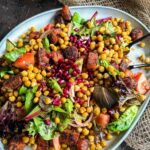
Roasted Chickpea and Carrot Baharat Salad
Roasted chickpeas and carrots spiced with Baharat, tossed with pomegranate and a molasses dressing. A bold Middle Eastern carrot salad recipe.
Servings 4 people
Calories 195kcal
Ingredients
Salad
- 2 can chickpeas
- 2 carrot
- 3 tbsp olive oil
- ½ shallot sliced
- 1 tomato
- ½ pomegranate
- 50 mixed leaves
- salt to taste
- pepper to taste
Baharat Spice Mix
- 1 tsp paprika
- 1 tsp ground cumin
- ½ tsp black pepper
- ½ tsp coriander powder
- ¼ tsp cinnamon
- ¼ tsp nutmeg
- ¼ tsp cardamom powder
- ¼ tsp ground cloves
Salad Dressing
- 1 tbsp apple cider vinegar
- 1 tbsp pomegranate molasses
- 2 tbsp olive oil
Instructions
How To Roast Chickpeas
- Drain chickpeas and wash well.
- Place in a tea towel and gently rub to help remove the skin.
- Ensure chickpeas are dry before tossing them through 1 ½ tbsp of olive oil.
- Place on a sheet pan lined with baking paper.
- Put in the oven at 200°C (400°F) for 30 minutes. Set aside to cool when completed.
How To Roast Carrots
- If you’re making your own Baharat spice, add all ingredients and mix.
- Peel carrots and cut into small pieces.
- Add 1 ½ tbsp olive oil, mix well.
- Add 2 tbsp Baharat spice mix and mix well.
- Place on a sheet pan lined with baking paper.
- Put in the oven at 200°C (400°F) for 30 minutes. Set aside to cool when completed.
Rest of the Salad
- Thinly slice ½ a shallot.
- Roughly cut tomato around the same size as the carrots.
- De-seed ½ pomegranate.
Salad Dressing
- In a small mixing bowl, add apple cider vinegar and pomegranate molasses.
- Using a whisk, mix well. Drizzle olive oil while mixing to emulsify the dressing.
Assembly
- In a large mixing bowl, add mixed leaves, shallot, tomato, pomegranate seeds, salt, pepper and salad dressing.
- Mix thoroughly.
- Place half the salad on a platter. Add half the chickpeas and carrots.
- Place the rest of the salad mix on top. Finish off with the rest of the chickpeas and carrots.
- Serve.
Notes
Variations And Substitutions
- No pomegranate molasses? Substitute with a mix of 2 teaspoons of balsamic vinegar and 1 teaspoon of honey. It won't be identical but captures a similar sweet-tart quality. Tamarind paste also works in a pinch.
- Fresh pomegranate seeds can be swapped for dried barberries or dried sour cherries if pomegranate is out of season, as both add tartness and visual interest.
- Add cheese: Crumbled feta scattered over the top adds a salty, creamy contrast that works beautifully with the Baharat spices and pomegranate. It makes the salad more substantial too.
- Add grains: Stir through cooked couscous, freekeh, or bulgur wheat to turn this into a more filling grain salad. Our Bulgur Pilaf is a great example of how well grains work in this kind of Middle Eastern-inspired dish.
- Store-bought Baharat: If you don't want to make the spice mix from scratch, pre-made Baharat is available at Middle Eastern grocery stores and some specialty delis. Start with 1.5 tbsp as pre-made blends vary in strength.
- Different vegetables: Roasted pumpkin, roasted cauliflower, or roasted beetroot all work beautifully with Baharat in place of or alongside the carrots.
- Add nuts: Toasted pine nuts or slivered almonds scattered over the top add extra crunch and a classic Middle Eastern touch.
- Dry the chickpeas thoroughly — this is non-negotiable for crunch: After draining and rinsing, spread them on a clean tea towel and rub gently. The rubbing also loosens the skins, which you can discard. Any moisture left on the chickpeas will create steam in the oven and prevent crisping.
- Use two separate baking trays: The chickpeas and carrots have different textures and release different amounts of moisture as they roast. Keeping them on separate trays means neither one steams the other, and both come out with better texture.
- Cut the carrots consistently: Uniform pieces roast evenly. Uneven cuts mean some pieces will be overdone while others are still firm. Aim for roughly 2cm pieces throughout.
- Let everything cool before assembling: Hot roasted chickpeas and carrots will wilt the mixed leaves immediately. Give them 10–15 minutes to cool slightly before assembly — warm is fine, piping hot is not.
- Layer, don't toss. The assembly method in this recipe. Start with half the salad base, then half the roasted elements, then repeat. This is intentional, as it means every serving gets a mix of leaves, roasted ingredients, and dressing rather than all the chickpeas sinking to the bottom.
- Emulsify the dressing properly: Drizzle the olive oil in slowly while whisking constantly. A properly emulsified dressing coats every ingredient evenly rather than pooling at the bottom of the bowl.
Nutrition
Calories: 195kcal | Carbohydrates: 9g | Protein: 1g | Fat: 18g | Saturated Fat: 2g | Polyunsaturated Fat: 2g | Monounsaturated Fat: 13g | Sodium: 29mg | Potassium: 238mg | Fiber: 2g | Sugar: 4g | Vitamin A: 5748IU | Vitamin C: 9mg | Calcium: 28mg | Iron: 1mg